
Next Lesson - Falls
Core
Ageing and How it Affects the Body
Ageing can be described as the progressive functional decline of the body's organ systems, and each person responds differently. Much of this decline comes from a loss of tissue elasticity over time. In the heart and the large arteries, this makes the tissue stiffer, leading to reduced compliance. Compliance is how easily a tissue stretches and expands as it fills. Stiffer, less compliant heart chambers and arteries fill less easily. The lungs are an exception: they lose elastic recoil (their tendency to spring back after being stretched), so lung compliance actually increases, while the chest wall becomes stiffer.
The skin becomes much thinner and wrinkles with increasing age. There is loss of vasculature (blood vessels) and elasticity of the skin. The supporting layer of the skin (the dermis) also thins, with a reduced quantity of collagen fibres and sparse, disordered elastin fibres. This means that elderly patients are much more susceptible to bruising after a minor knock. The small subcutaneous blood vessels lose their support and become fragile (friable), so they break and bleed more easily. Elderly patients also often have poorer venous access (meaning they are harder to cannulate) than their younger counterparts. This is because their veins move around much more as they are not as tethered to the underlying tissues, as well as being more easily damaged.
With advancing age, changes occur in respiratory mechanics. Lung compliance tends to increase due to loss of elastic recoil, while chest wall compliance decreases. Measures such as FEV1 (forced expiratory volume in 1 second), FVC (forced vital capacity) and vital capacity (the most air a person can breathe out after a full breath in) are reduced, whereas TLC (total lung capacity) is usually preserved or may increase slightly. These changes reflect reduced elastic recoil of the lungs, and the small airways are held open less well.
The alveoli and terminal branches of the airways are more susceptible to collapsing as they have less elastic support keeping them patent (open).
Respiratory complications post-operatively such as atelectasis (collapse of part of the lung), pulmonary emboli (blood clots blocking arteries in the lungs) and pneumonia are increasingly common in the elderly.
The decline in the cardiovascular system occurs when larger blood vessels lose elasticity and become less compliant. This results in increased vascular resistance (greater resistance to blood flow through the vessels) and so hypertension. Hypertension in turn leads to left ventricular strain and hypertrophy.
Over time, the electrical conducting cells in the heart decline in number, which contributes to arrhythmias (abnormal heart rhythms) becoming more common. These include heart block (delayed or blocked electrical signals between the atria and the ventricles), ectopic beats (extra beats that start outside the heart's normal pacemaker) and atrial fibrillation (an irregular, often fast, rhythm).
Cardiac output decreases with each passing decade as stroke volume & contractility of the heart decrease. Any dysfunction of the atria causes their contraction to be impaired. As a result, ventricular filling is reduced. Atrial contraction normally contributes around 20 to 30% of ventricular filling, so impairment of atrial function can lead to a reduction in cardiac output.[1].
These changes can contribute to reduced exercise tolerance and reduced haemodynamic reserve (the ability to increase blood flow when demand rises). Separately, systolic blood pressure commonly rises with age as the large arteries stiffen.
Many disorders of the central nervous system in older people, such as stroke and vascular dementia, are secondary to (caused by) a reduced blood supply to the brain. Atherosclerosis and hypertension are among the most common causes of this impaired supply. Not every disorder is vascular, though: Alzheimer's disease, the most common cause of dementia in the UK, is thought to be caused by an abnormal build-up of proteins in and around brain cells.
Some cerebral atrophy (shrinkage of the brain) is expected with age. In Alzheimer's disease, the rate of brain atrophy correlates strongly with the rate of cognitive decline (worsening memory and thinking)[2].
Kidney function declines gradually through adult life. The glomerular filtration rate (GFR, the volume of fluid the kidneys filter from the blood each minute, used to measure kidney function) falls by about 1 ml/min/1.73 m² each year (a unit adjusted for body size) after the age of about 30 to 40[3]. This is due to the loss of glomeruli throughout the renal cortex (the outer layer of the kidney). Changes in the blood vessels also reduce renal perfusion, which lowers kidney function and increases glomerulosclerosis (scarring of the glomeruli).
Diabetes has an increased prevalence in the elderly and the microvascular (small blood vessel) complications of the disease are known to worsen renal function. Elderly people are often prescribed nephrotoxic medication (drugs that can damage the kidneys), such as non-steroidal anti-inflammatory drugs (NSAIDs), and their kidneys are more susceptible to this damage. Some drugs change blood flow through the kidneys (renal haemodynamics), such as angiotensin-converting enzyme (ACE) inhibitors. These can contribute to a fall in glomerular filtration in certain situations, such as dehydration or acute illness, so they need monitoring. Elderly men with enlarged prostates are also at risk of obstructive nephropathy (kidney damage caused by blocked urine flow).
Pharmacodynamics and Pharmacokinetics
The pharmacodynamics and pharmacokinetics of many drugs are altered in elderly patients as the rates at which they are absorbed, metabolised, and cleared can all change dramatically with the changes in the functioning of various organs. Patients often have an increased sensitivity to drugs that depress the central nervous system. Too high a dose can leave them with cognitive and physical impairments. The cumulative anticholinergic effects of certain medications are described as a high anticholinergic burden. These medications need to be monitored and adjusted accordingly to prevent this from happening.
In elderly patients, reduced hepatic (liver) function slows the metabolism of medications, and reduced renal function slows their elimination. As a result, many medications stay in the body for longer (their half-life, the time taken for the blood level to halve, is prolonged) and can build up. Again, doses should be adjusted accordingly. Intravenous anaesthetics can often take much longer to take effect in elderly patients. This is because the decreased cardiac output increases the amount of time it takes for the drug to reach the brain. Older patients also need lower doses of these drugs, given more slowly: for example, the BNF advises a lower dose of propofol, given at a slower rate, for adults aged 55 and over.
Elderly patients often have either a reduced total body water or increased amounts of adipose tissue leading to an altered volume of distribution for some drugs.
Those patients with decreased plasma proteins in their blood will have reduced protein binding of any medication that they take. This means that there are increased levels of free drugs available in the blood and so the circulating dosage of any of these medications is effectively increased.
Elderly patients are commonly taking multiple medications every day to treat multiple different conditions and so polypharmacy is common. There is no single agreed definition of polypharmacy, but it is most commonly defined as taking 5 or more medications a day. This phenomenon is known to increase the risk of falls and decrease patients' quality of life.
A small amount of cognitive decline is to be expected with age through natural brain atrophy. However, conditions such as dementia can worsen this decline markedly, leading to major changes in cognition (memory, thinking and understanding) and behaviour. This leaves patients very vulnerable, both medically and socially.
Dementia is becoming an increasingly common condition with the UK’s ageing population. Over a quarter of patients in acute hospital beds have dementia, as do a high proportion of patients in community hospitals[4]. The proportion in care homes is even higher: about 69% of care home residents were estimated to have dementia in 2014[5]. These patients often need care, either from their relatives or from professional carers through a package of care (regular care services arranged to meet their needs). The diagnosis is life-changing. It is based on the history, any examinations performed, and a full cognitive assessment (tests of memory and thinking) and mental state examination (an assessment of mood, thoughts and behaviour). Ideally, the assessment should take place in the patient’s usual environment, such as their home, when the patient is fully awake, relaxed and free from pain. Assessing the patient under these conditions gives more reliable results on which to base the diagnosis.
There are several subtypes of dementia, which are discussed in the dementia article. Each subtype has its own features. It is important to identify which type a patient has to predict their prognosis and offer any medical interventions that may help.
The early signs of dementia which are often picked up are memory issues or an inability to perform more complicated cognitive tasks. It is important to remember that not every patient with dementia has lost their capacity to make decisions for themselves. Capacity is assessed for each specific decision, at the time it needs to be made, and a person may have capacity for some decisions but not others. Dementia usually progresses, so over time patients are likely to lose capacity for more and more decisions.
Patients presenting with confusion should also undergo investigations to look for reversible physical causes. These include blood and urine tests, for example to look for undiagnosed hypothyroidism (an underactive thyroid). Confusion that develops over hours or days, and often fluctuates, may be delirium. If it is unclear whether a patient has delirium, dementia or both, delirium should be treated first. If dementia is still suspected once reversible causes have been investigated, the patient should be referred to a specialist service, such as a memory clinic. Structural imaging, such as a CT or MRI scan of the head, is usually offered to rule out other causes and to help identify the subtype of dementia. Every patient with a new diagnosis of dementia should be assessed on their ability to care for themselves, and support should be put in place if it is needed.
Sadly, there is currently no cure for dementia, so treatment aims to relieve symptoms and help the patient live as well as possible. For Alzheimer's disease, medicines called acetylcholinesterase inhibitors (donepezil, galantamine and rivastigmine) can temporarily reduce symptoms in mild to moderate disease. Agitation and distress should first be managed with psychosocial and environmental approaches (support, and changes to the patient's surroundings and daily routine). Antipsychotic medicines should only be offered if the patient is at risk of harming themselves or others, or is severely distressed by agitation, hallucinations or delusions. Group cognitive stimulation therapy (structured group activities that keep the mind active) is recommended for people with mild to moderate dementia.
While patients still have capacity, they should be offered early and ongoing discussions about advance care planning (planning ahead for their future care, for example by setting up a lasting power of attorney, which lets someone they trust make decisions for them). This lets them say how they would like to be cared for once they can no longer make these decisions or look after themselves. As patients near the end of their lives, the palliative care team should be involved, so that the patient is kept comfortable and at peace.
Common Issues in Elderly Patients
Pressure sores (also called pressure ulcers) are a source of great discomfort and pain. Anyone with limited mobility is at risk, including patients who are bedbound or who sit for long periods, and many pressure sores can be prevented with appropriate care. Sustained pressure and shear (dragging) forces squeeze the skin and underlying tissues against a bony prominence (a place where bone lies close under the skin, such as the heels, hips and sacrum). This blocks the small blood vessels, causing local ischaemia and breakdown of the tissue. As well as being very painful, pressure sores pose a large infection risk if the skin barrier is broken, and they are strongly associated with an increased mortality rate. Prevention includes changing the patient's position regularly (at least every 6 hours for adults at risk, and at least every 4 hours for those at high risk), using pressure-relieving mattresses and cushions, and checking the skin.
Malnutrition is worryingly common in the elderly population and again is preventable. It is a discrepancy between the calories and nutrients that the individual eats and what they require to maintain their health. This can either be in the form of too much or too little intake, however, in this context the more harmful is considered to be an inadequate intake (i.e. too little). It is very important therefore to assess every patient with a screening tool for malnutrition. A commonly used tool is the malnutrition universal screening tool (MUST). The full tool can be found here. It uses the patient's BMI, the percentage of unplanned weight loss in the past 3 to 6 months, and the acute disease effect (if the patient is acutely ill and there has been or is likely to be no nutritional intake for >5 days) to predict their risk of malnutrition. This then guides your management plan and advises whether a dietitian review is needed.
There are many reasons why a patient may become malnourished:
- They may not be eating because they don’t like the food in hospital or at a new care home.
- The patient’s dietary requirements may not be being met through what they are eating.
- Patients may be unable to cook for themselves at home.
- They may be too weak to eat and require assistance cutting up food or even need to be fed.
- They may have a poor swallow or cannot chew food for a variety of reasons, for example missing teeth or ill-fitting dentures.
- Patients who are systemically unwell (unwell throughout the body) often lose their appetite and refuse food, and some do not absorb nutrients well even when they do eat.
Dietitians can help to rebuild a patient’s nutritional status and educate them or put in place measures to prevent them getting to this state again. Patients at risk of malnutrition who are having surgery should also see a dietitian, because surgery may require a period without food (being nil by mouth).
Frailty is a risk state which arises from the accumulation of deficits (health problems such as diseases, symptoms and disabilities) throughout the patient’s life. Put more simply, people living with frailty have lost their in-built reserves, so they become increasingly vulnerable to illness.
Frailty is not simply a result of age. People of the same age can have very different co-morbidities and risks of death, and frailty can occur at different ages.
Frailty as a concept can be explained through the effect of a minor illness, or the addition of a new medication on a patient. If a patient is fit and healthy, a minor illness or new medication causes a small dip in their overall baseline wellness, which then resolves with a swift and full recovery.
When frail patients sustain the same insult (a stressor such as an infection or a new medicine), they will have a much greater drop in function and a far longer recovery period, which will not return them to their previous baseline. This drop in function can push patients into an unstable state, which often shows itself as falls and delirium. As a general rule, the response to an insult is disproportionate to the size of the insult.
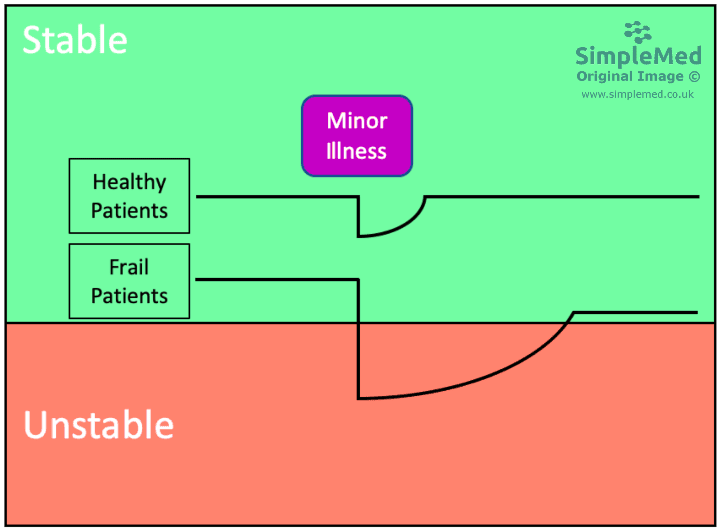
Diagram - The difference that a minor illness can make on two patients, one healthy and one frail. Notice how the frail patient drops much further, takes longer to recover, and ends up on a much lower baseline
SimpleMed Original by Dr. Tom Bradley
Frailty becomes more common with age, as co-morbidities accumulate, but it is not a fixed, steady decline. Life-changing events such as car crashes or certain diseases can leave patients frail at much younger ages, and with the right support the progression of frailty can be slowed.
One way to measure frailty is the Frailty Index Score, which is the proportion of possible deficits that a person has. In UK general practice, the electronic Frailty Index (eFI) uses 36 deficits recorded in the GP record to identify people aged 65 and over who may be living with frailty. It places them into four groups: fit, mild frailty, moderate frailty and severe frailty. The eFI is a risk stratification tool (it shows who is most likely to be frail), not a diagnostic test, so frailty in an individual should be confirmed with a validated clinical tool. NHS England suggests that each local health system uses a single tool, such as the Rockwood Clinical Frailty Scale, across all care settings.
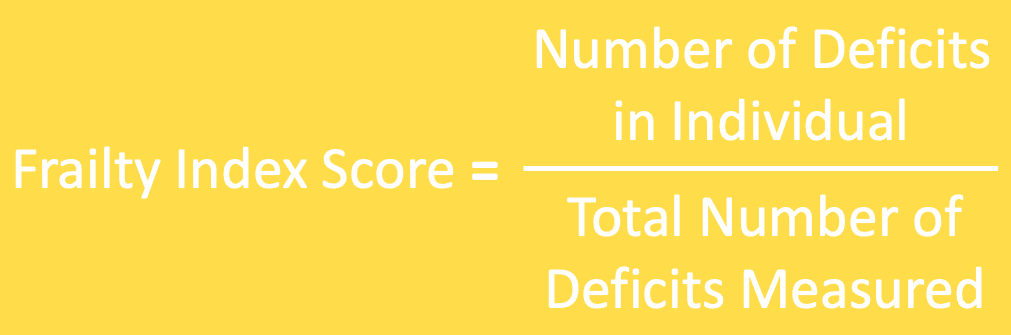
Diagram - The formula used for the frailty index score
SimpleMed original by Dr. Tom Bradley
The index score quantifies the number of things that are contributing to the frailty of this patient. For example, if a patient had only 5 of 70 possible deficits, their frailty index score would be very low (5/70) and they would be considered fit. There is a strong correlation between a higher frailty index score and adverse outcomes of treatment.
Frail patients require individual assessments that look at their baseline functioning and their ability to perform activities of daily living (everyday tasks such as washing, dressing and eating). As part of this assessment, they will often be reviewed by a multi-disciplinary team (professionals from different disciplines working together). This team includes doctors, dietitians, nurses, occupational therapists, and speech and language therapists, to name but a few. Together they assess every aspect of the patient’s life and decide how best to care for them. These assessments may show that a patient is not suitable for certain interventions, because the patient is ‘too frail’ to recover well afterwards.
[1] https://www.ncbi.nlm.nih.gov/books/NBK482421/
[2] https://pubmed.ncbi.nlm.nih.gov/10331700/
[3] https://www.ncbi.nlm.nih.gov/pmc/articles/PMC4741051/
[4] https://www.dementiastatistics.org/statistics/hospitals/
Edited by: Dr. Maddie Swannack
Reviewed by: Dr. Thomas Burnell and Dr. Marcus Judge
- 721