
Next Lesson - Intestinal Pathology
Core
Cirrhosis develops in response to any chronic liver disease due to ongoing inflammation causing fibrosis. Over years, this fibrosis and associated hepatocyte necrosis results in usually irreversible changes to the architecture (structure) of the liver and a reduction in liver function.
There are many causes of cirrhosis:
Alcohol-Related Liver Disease (ARLD)
Increased alcohol consumption initially causes fatty changes in the liver. Breaking down alcohol raises the level of NADH in hepatocytes. This slows the burning of fatty acids (fatty acid oxidation), so fat builds up. Acetaldehyde (a toxic breakdown product of alcohol) adds to the liver injury. Fatty change occurs over weeks-months and is usually reversible if the person stops drinking.
However, with continued (months-years) alcohol abuse this can develop into alcoholic hepatitis (inflammation of the liver caused by alcohol). Over time, scarring (fibrosis) builds up.
Alcoholic hepatitis is initially reversible. It can cause jaundice, hepatomegaly (an enlarged liver) and right upper quadrant (RUQ) pain. Without early intervention it can progress to cirrhosis, which usually cannot be reversed.
Metabolic Dysfunction-Associated Steatotic Liver Disease (MASLD), previously Non-Alcoholic Fatty Liver Disease (NAFLD)
MASLD (steatotic means fatty) is the accumulation of triglycerides and other lipids (fats) in hepatocytes, in a person who has at least one cardiometabolic risk factor (such as obesity or type 2 diabetes) and no other cause, such as alcohol. It is common in patients with obesity, type 2 diabetes mellitus, and metabolic syndrome (a group of problems that occur together: central obesity, high blood pressure, diabetes or insulin resistance, and abnormal blood fats). It progresses in a similar pattern to alcohol-related liver disease (i.e. fatty changes to fibrosis).
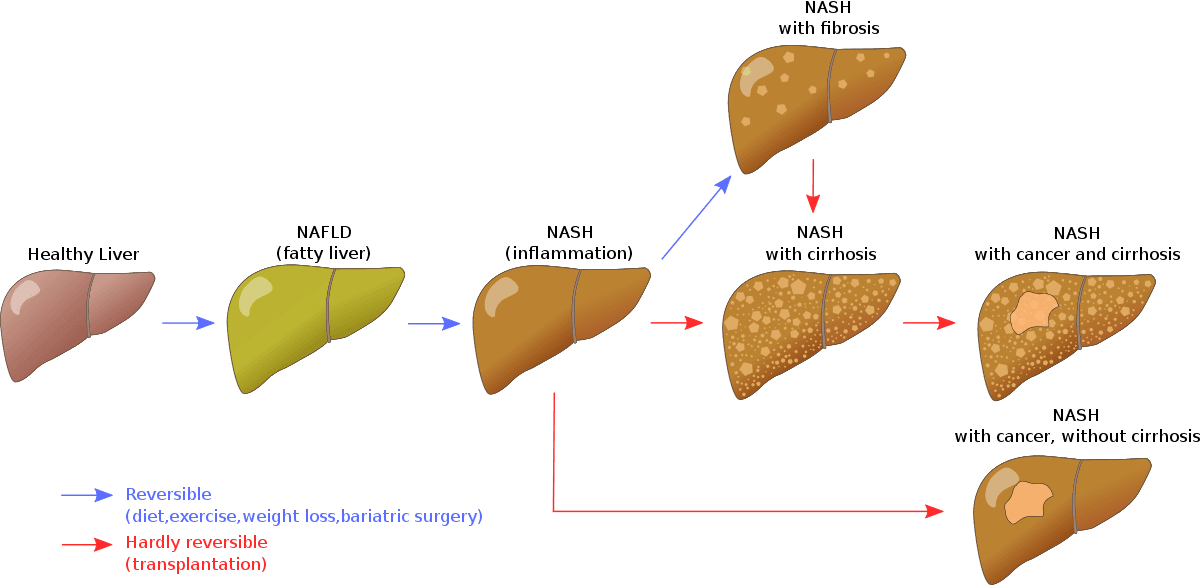
Diagram - Progression of MASLD (previously NAFLD) to Cirrhosis
Creative commons source by Signimu [CC BY-SA 4.0 (https://creativecommons.org/licenses/by-sa/4.0)]
Hepatotoxic drugs (drugs that can damage the liver) can cause liver injury. Long-term use of some of them can lead to fibrosis of the liver, which can progress to cirrhosis. Methotrexate (a drug that dampens the immune system) is one example, as cirrhosis has been reported. Other drugs that can damage the liver include amiodarone (used for abnormal heart rhythms), sulfasalazine and azathioprine (both used to treat inflammatory conditions), and some antibiotics such as flucloxacillin and co-amoxiclav.
There are various types of viral hepatitis (called hepatitis A to E), but the two main types that contribute to liver cirrhosis are hepatitis B and hepatitis C. Both viruses can be passed on through blood, for example by sharing needles in IV drug use. Hepatitis B is spread through blood and body fluids, so it can also be passed on through unprotected sex and from mother to baby during childbirth. Hepatitis C is mainly spread through contact with infected blood. Sexual transmission (where blood is present) and passing from mother to baby during pregnancy are less common.
Hepatitis B can be prevented by a vaccine. Antiviral treatments can control chronic hepatitis B, but there is no known cure for it. Hepatitis C does not have a vaccine, but a course of antiviral tablets taken for 8 to 12 weeks can cure it in most people.
An autosomal recessive inherited condition (the faulty gene is not on a sex chromosome, and two faulty copies are needed) that causes abnormal iron metabolism. As a result, there is excess iron deposition in the liver.
An autosomal recessive inherited condition (the faulty gene is not on a sex chromosome, and two faulty copies are needed) that causes abnormal copper metabolism. As a result, there is excess copper deposition in the liver.
Primary Sclerosing Cholangitis (PSC)
An autoimmune condition that causes fibrosis of the bile ducts both inside the liver (intra-hepatic) and outside it (extra-hepatic). This condition can be asymptomatic or may cause pruritus (itching), jaundice, and/or cholangitis (inflammation or infection of the bile ducts). PSC is associated heavily with inflammatory bowel disease (long-term inflammation of the gut), particularly ulcerative colitis (inflammation of the lining of the colon).
Primary Biliary Cholangitis (PBC), previously called Primary Biliary Cirrhosis
An autoimmune condition that causes destruction of the intrahepatic bile ducts (the bile ducts inside the liver). This condition can be asymptomatic or may cause pruritus (itching) and/or jaundice.
There are many other conditions that can cause cirrhosis of the liver. These can include alpha-1 antitrypsin deficiency (a genetic condition affecting the lungs and the liver) and Budd-Chiari syndrome (a blockage of the veins that drain blood out of the liver).
Cirrhosis is usually irreversible, although the changes can partly improve in some people once the cause is removed. Management focuses on treating the underlying cause, preventing and managing complications, and monitoring for progression. Liver transplantation is considered in selected patients with advanced or decompensated disease (when complications such as jaundice, fluid in the abdomen or bleeding have developed).
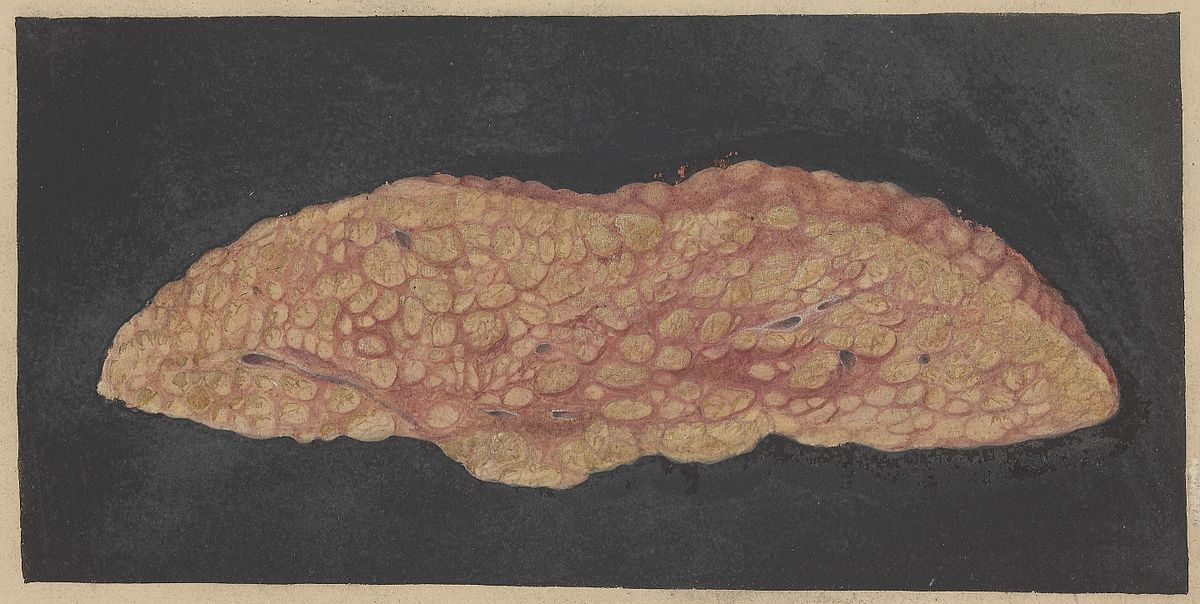
Image - A cirrhotic liver that has undergone fatty degeneration
Creative commons source by Wellcome Images [CC BY-SA 4.0 (https://creativecommons.org/licenses/by-sa/4.0)]
Jaundice itself is a symptom not a condition, but it has a very strong association with liver pathology, so it is important to consider the pathologies that can cause it. Jaundice is the yellow discolouration of the sclera (the white of the eye) and skin due to raised levels of bilirubin (pigmented molecule) in the blood.
Bilirubin is the breakdown product of haemoglobin and is bound to albumin in its unconjugated state (this form is not water-soluble). The liver then conjugates it, which makes it water-soluble so that it can be excreted in bile. Therefore, if a patient has jaundice with high levels of unconjugated bilirubin in their blood, it is likely due to an increased breakdown of haemoglobin that the liver cannot handle. If the patient has high levels of conjugated bilirubin, it is likely due to liver disease or to problems excreting the bilirubin as bile, for example a blocked bile duct. This difference is important. Conjugated bilirubin is water-soluble, so if its level in the blood is high, it is excreted in the urine and makes the urine dark.
The causes of jaundice can be divided into three categories depending on the location of the pathology:
Pre-hepatic jaundice is caused by an increased breakdown of haemoglobin. This is usually due to haemolysis (the breakdown of red blood cells) at a faster rate than normal, so the liver cannot meet the demands of the extra bilirubin. Causes include haemoglobinopathies (inherited conditions that affect the haemoglobin molecule), such as sickle cell anaemia and thalassaemia. Hereditary spherocytosis (an inherited fault in the red blood cell membrane) is another cause, but it is not a haemoglobinopathy.
In pre-hepatic jaundice there is often an associated anaemia and high levels of unconjugated bilirubin but other liver function tests (LFTs) are often normal. Pre-hepatic jaundice does not cause any change in the colour of the urine or stools.
If a patient has jaundice with a mixture of unconjugated and conjugated bilirubin in the blood, this suggests that the hepatocytes are damaged and have decreased conjugating ability. The pathology is therefore likely to be in the liver.
This damage can be caused by cirrhosis (or any of the precursors to cirrhosis listed above), infection or drug toxicity e.g. paracetamol overdose.
Alongside a mixed bilirubin picture in the blood, alanine transaminase (ALT) and aspartate transaminase (AST) are likely to be raised. These enzymes are markers of hepatocyte damage. Alkaline phosphatase (ALP) is a marker of biliary damage (damage to the bile ducts). It is likely to be normal or only mildly raised. There may be dark urine, because the excess conjugated bilirubin is filtered into the urine. Stools remain unchanged, because the normal amount of conjugated bilirubin enters the gastrointestinal tract.
If a patient has jaundice with raised levels of conjugated bilirubin in the blood, this suggests an obstruction to the excretion pathway (the route that bile takes out of the liver). Liver function is usually unaffected. Causes of excretion pathway obstruction include gallstones, pancreatitis, malignancy (such as pancreatic cancer) and biliary strictures (narrowings of the bile ducts). PBC and PSC damage the bile ducts and give a similar pattern of blood results, but they are usually classed as intra-hepatic (inside the liver) causes of jaundice.
In post-hepatic jaundice, blood tests often show a cholestatic pattern (a pattern that points to blocked bile flow). ALP and gamma-glutamyl transferase (gamma-GT) are raised. Both are markers of biliary damage. ALT and AST may be normal or less raised. There may be dark urine, because conjugated bilirubin is water-soluble and is excreted via the urinary system. There may also be pale stools, because less bilirubin reaches the gastrointestinal tract.
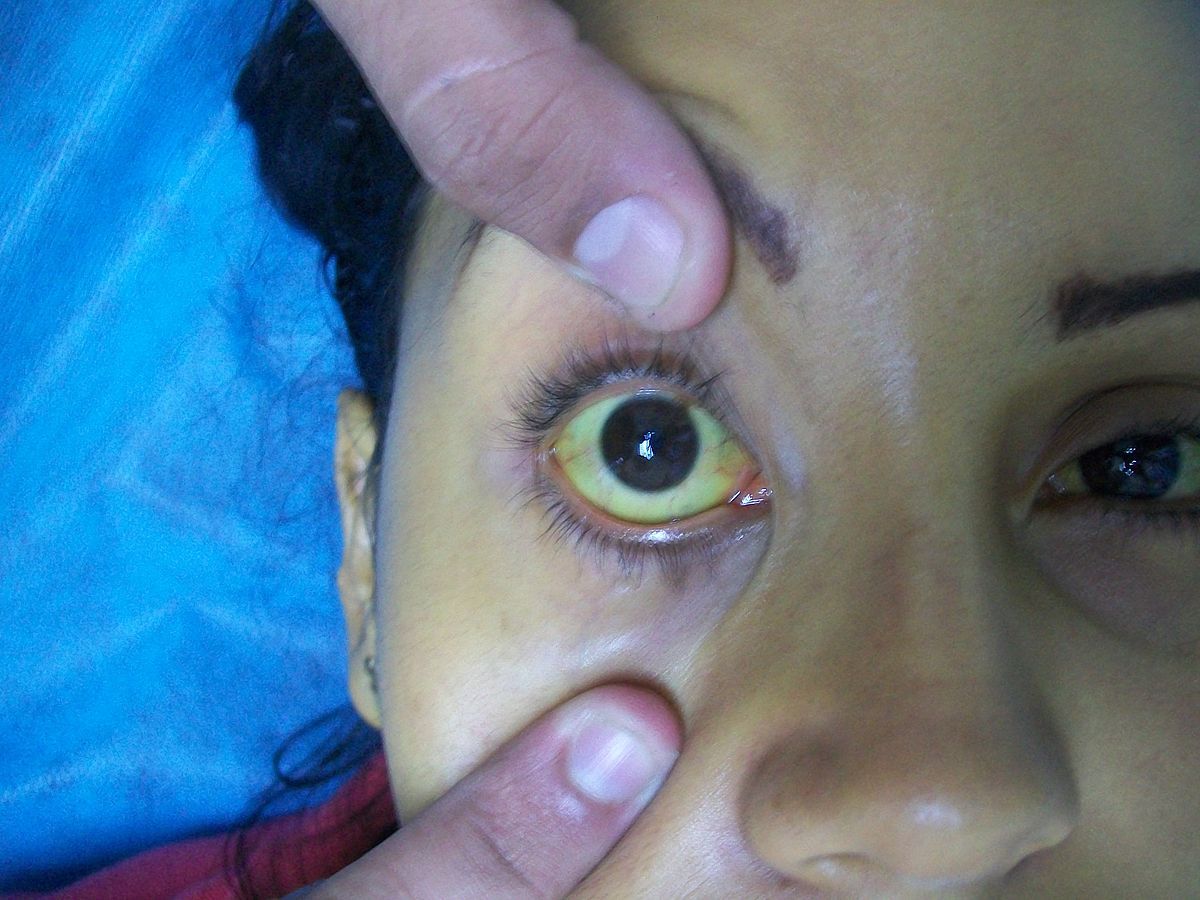
Image - Yellow sclera of jaundice
Creative commons source by Bobjgalindo [CC BY-SA 4.0 (https://creativecommons.org/licenses/by-sa/4.0)]
Portal hypertension is a condition of increased blood pressure within the portal venous system (PVS). It is most often caused by cirrhosis, where fibrosis of the liver around the portal blood vessels makes it harder for blood to flow through the liver. Less often, it is caused by a clot in the portal vein (before the liver), or by problems that stop blood leaving the liver (after the liver), such as Budd-Chiari syndrome or right heart failure. Cirrhosis compresses the veins entering the liver from the PVS. This increases the hydrostatic pressure (the pressure that the blood puts on the vein walls) in the PVS, so fluid moves out of the veins. Low blood albumin (made by the liver) and salt and water retention by the kidneys also contribute. The result is ascites (fluid in the abdominal cavity). Blood can also be shunted from the PVS to the systemic venous system (the veins that return blood from the body to the heart). This happens at anastomoses (places where portal and systemic veins connect). The veins there become distended and form varices (enlarged veins).
There are three important sites of varices:
- Distal portion of the oesophagus: oesophageal varices (in the submucosa, the layer of the wall under the lining) can rupture and can cause a significant upper gastrointestinal bleed.
- Umbilical region: the paraumbilical veins (remnants of the foetal umbilical system, linked to the ligamentum teres, the ligament that runs from the umbilicus to the liver) can open up again. They connect the portal vein to the veins of the abdominal wall. This forms the clinical sign known as caput medusae (dilated veins that radiate out from the umbilicus).
- Anorectal region: anorectal varices can occur due to portal hypertension. These are distinct from haemorrhoids (piles), which are not caused by portal hypertension.
Another complication of portal hypertension in cirrhosis is acute kidney injury (AKI), which includes hepatorenal syndrome (a form of kidney failure that happens in advanced liver disease). Portal hypertension leads to splanchnic vasodilation (widening of the blood vessels that supply the abdominal organs). This lowers the effective volume of blood in the arteries. As a result, the renin-angiotensin-aldosterone system (a hormone system that makes the body hold on to salt and water) and the sympathetic nervous system are activated. Together with other substances that narrow blood vessels, this reduces blood flow to the kidneys, which in turn can lead to AKI.
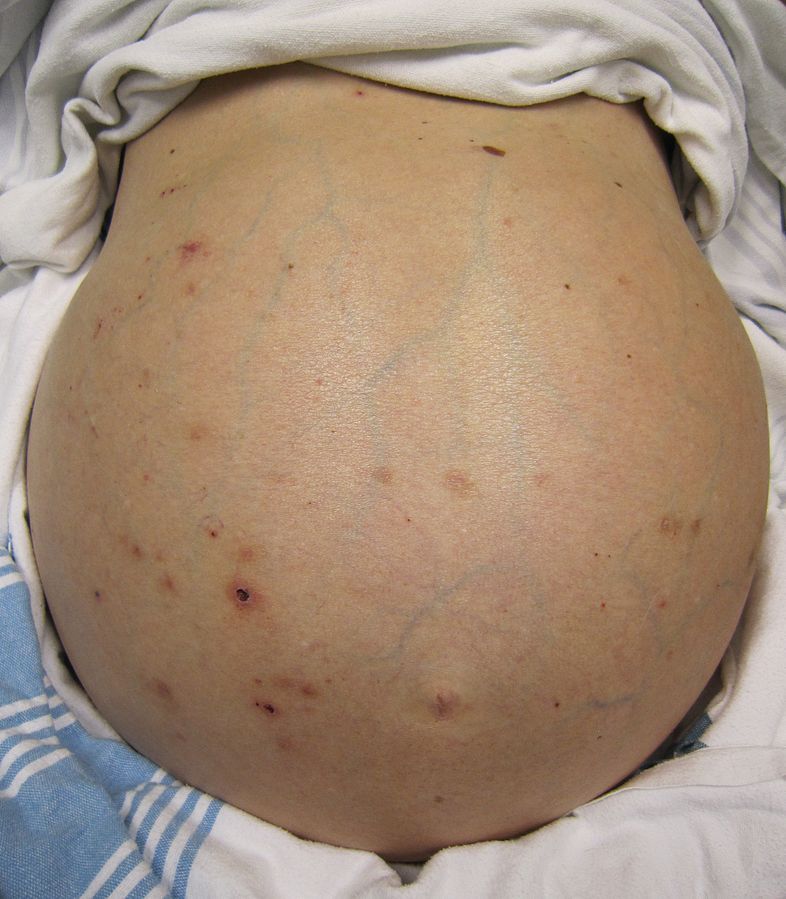
Image - Ascites due to hepatic failure
Creative commons source by James Heilman, MD [CC BY-SA 4.0 (https://creativecommons.org/licenses/by-sa/4.0)]
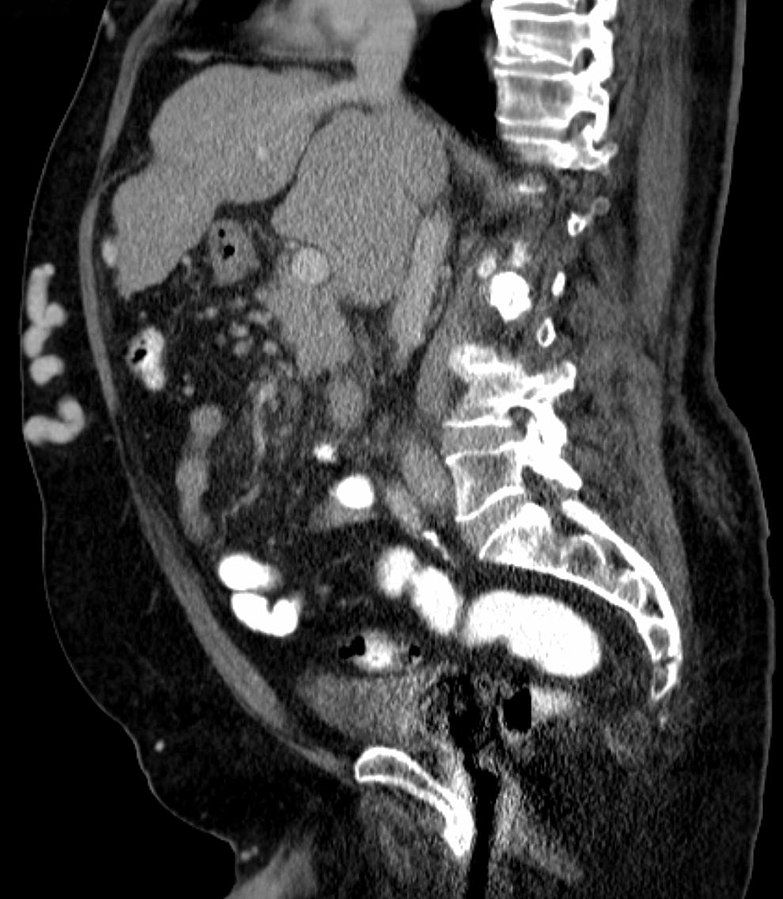
Image - CT scan showing caput medusae. Look for the winding bright (white) veins in the front wall of the abdomen. These are the enlarged abdominal wall veins.
Creative commons source by Hellerhoff [CC BY-SA 4.0 (https://creativecommons.org/licenses/by-sa/4.0)]
The gallbladder is a small organ that sits below the liver. It collects the bile produced by the liver. It releases the bile into the duodenum in response to cholecystokinin. Cholecystokinin is a hormone released from the duodenum when fats and amino acids arrive there.
Gallstones are small stones formed from cholesterol, bile pigments and phospholipids in the gallbladder. They can exist in the gallbladder and be asymptomatic.
Risk factors for the development of gallstones include female sex (women have a 2 to 3 times higher incidence than men), obesity, and increasing age (the risk rises noticeably after 40). Ethnicity also matters: in the US, gallstones are most common in people of Hispanic and Native American ethnicity. Diabetes mellitus and rapid weight loss (more than 1.5 kg a week) are also risk factors. The phrase “fair, fat, female, forty” is a memory aid, but it oversimplifies these risk factors.
Biliary colic occurs when gallstones are present and temporarily obstruct the cystic duct (the duct that drains the gallbladder). Patients typically present with RUQ pain, or pain in the epigastrium (the upper middle part of the abdomen). The pain comes in episodes. Each episode is steady and usually lasts for more than 30 minutes but less than 8 hours. It is often associated with eating (particularly when foods with a high-fat content are consumed). Despite its name, it is not true colicky pain (pain that comes and goes in waves).
This condition is investigated with an ultrasound scan and LFTs. Most gallstones are radiolucent (x-rays pass through them), so they would not show up on an x-ray. LFTs may be abnormal if a stone has moved into the common bile duct. Inflammatory markers (such as C-reactive protein and the white cell count) are NOT raised in biliary colic, as it is not a permanent obstruction.
Pain is treated with a nonsteroidal anti-inflammatory drug (NSAID) such as diclofenac. NICE advises offering laparoscopic (keyhole) cholecystectomy (surgery to remove the gallbladder) to people with symptomatic gallstones. This is usually a planned (elective) operation. A low-fat diet can be considered to help prevent further biliary pain.
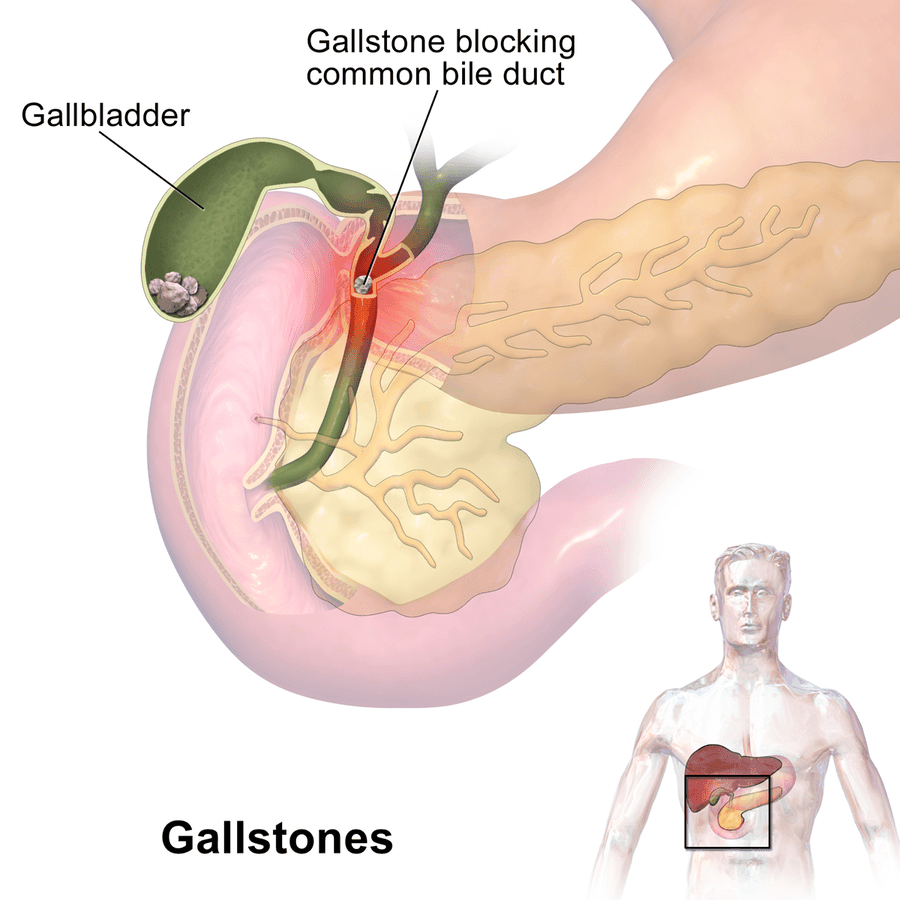
Diagram - Gallstones blocking the common bile duct
Creative commons source by BruceBlaus [CC BY-SA 4.0 (https://creativecommons.org/licenses/by-sa/4.0)]
Acute cholecystitis (inflammation of the gallbladder) usually occurs when a gallstone becomes impacted (stuck) in the cystic duct. The obstruction is sustained, unlike in biliary colic, and the condition often follows episodes of biliary colic. Less often, acute cholecystitis is acalculous (it develops without gallstones). Acalculous cholecystitis is usually a complication of a serious illness, infection or injury.
Patients typically present with constant RUQ pain and fever. They may also have a positive Murphy’s sign, but it is not present in every patient. To test for it, the examiner palpates (presses on) the right subcostal region (just below the ribs on the right) while the patient breathes in. The inflamed gallbladder moves down into the examiner's hand, which causes pain on inspiration.
An ultrasound scan may show inflamed gallbladder walls as well as gallstones. Inflammatory markers (such as C-reactive protein and the white cell count) are usually raised. LFTs may be normal, but mild jaundice occurs in about 1 in 5 patients. This happens because of inflammation around the bile duct, or because the swollen gallbladder presses on it. A higher bilirubin level suggests a stone in the common bile duct or cholangitis.
Treatment includes antibiotics and early laparoscopic (keyhole) cholecystectomy in suitable patients. NICE advises that this is carried out within 1 week of diagnosis.
Ascending cholangitis is the infection of the biliary tree (the system of bile ducts), usually proximal to (on the liver side of) a stone that is blocking the bile duct. Patients may present with constant RUQ pain, fever and post-hepatic jaundice. Together these three features are known as Charcot’s triad. However, the full triad is seen in only a minority of patients (roughly 20 to 50%). Adding shock and confusion gives Reynolds’ pentad, which suggests severe disease. Treatment includes IV antibiotics, fluids and urgent biliary decompression (draining the blocked bile duct), most commonly with ERCP (endoscopic retrograde cholangiopancreatography, an endoscope passed through the mouth to look at and unblock the bile ducts).
Acute pancreatitis is injury and necrosis of acinar cells (the cells that make digestive enzymes) of the pancreas and has a variety of causes often remembered by the mnemonic I GET SMASHED.
- Idiopathic (no known cause)
- Gallstones
- Ethanol (Alcohol abuse)
- Trauma
- Steroids
- Mumps
- Autoimmune conditions
- Scorpion sting
- Hyperlipidaemia (high blood lipids)/Hypercalcaemia (high blood calcium)
- ERCP (Endoscopic Retrograde Cholangiopancreatography)
- Drugs e.g. azathioprine
The most common causes are gallstones and alcohol abuse.
Patients typically present with intense epigastric pain (pain in the upper middle of the abdomen) that radiates to the back. They also have nausea and vomiting. Sometimes there is bruising around the umbilicus (Cullen’s sign: one name = one bruise) or in the flanks (Grey-Turner’s sign: two names = two flanks).
Diagnosis needs at least two of three features: typical abdominal pain, a blood level of amylase or lipase (enzymes made by the pancreas) more than 3 times the upper limit of normal, and characteristic findings on imaging. An ultrasound scan is used if gallstones are suspected. A CT scan may confirm pancreatic inflammation if the enzyme levels are not raised. The Modified Glasgow Score does not diagnose pancreatitis. It grades its severity.
Management is mainly supportive, e.g. IV fluids and analgesia. Patients should not be made nil by mouth (kept from eating and drinking) unless there is a clear reason, such as vomiting. Patients with moderately severe or severe disease need enteral nutrition (feeding into the gut), started within 72 hours of presentation. This is usually given through a nasogastric tube (a tube passed through the nose into the stomach). Parenteral nutrition (feeding into a vein) is used only if enteral nutrition has failed or is not possible. The underlying cause is then treated. Most patients with gallstone pancreatitis do not need ERCP. Urgent ERCP is indicated if there is cholangitis, or persistent biliary obstruction shown by a rising bilirubin.
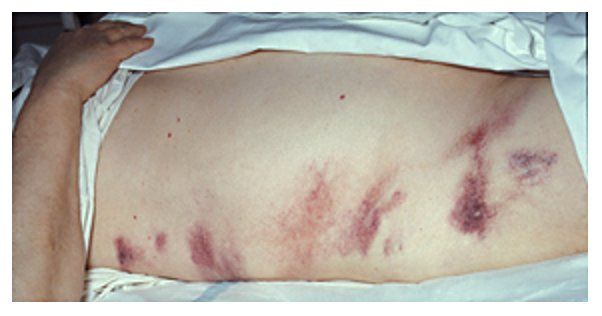
Image - Grey-Turner's Sign
Creative commons source by Herbert L. Fred, MD and Hendrik A. van Dijk [CC BY-SA 4.0 (https://creativecommons.org/licenses/by-sa/4.0)]
Edited by: Dr. Maddie Swannack
Reviewed by: Dr. Thomas Burnell and Dr. Marcus Judge
- 1628