
Next Lesson - Epilepsy and Anti-epileptic Drugs
Core
A Shared Synapse Map
Psychopharmacology is easier when medicines are placed on a normal synapse before drug names are learned. Monoamine neurones synthesise transmitter in the cytosol, load it into vesicles through vesicular monoamine transporter, and release it when an action potential opens voltage-gated calcium channels. Serotonin is made from tryptophan, while dopamine and noradrenaline share a pathway beginning with tyrosine. Released transmitter binds receptors on nearby cells and autoreceptors on the releasing terminal.
Transporters then retrieve much of the released monoamine. The serotonin transporter, SERT, returns serotonin to the presynaptic terminal. The norepinephrine transporter, NET, retrieves noradrenaline and can also influence dopamine clearance in regions with little dopamine transporter. Recovered transmitter can be repackaged or metabolised intracellularly by monoamine oxidase. These are separate steps: blocking reuptake prolongs extracellular transmitter availability, while inhibiting monoamine oxidase reduces intracellular breakdown and expands releasable stores over time.
Changing transmitter concentration is only the first layer. Monoamine receptors differ in location, G-protein coupling and feedback role. An immediate rise at a synapse can produce early physiological or adverse effects, yet repeated exposure can alter autoreceptor feedback, receptor abundance, gene transcription and synaptic plasticity. A transporter block therefore begins quickly, but the resulting network does not remain biologically static.
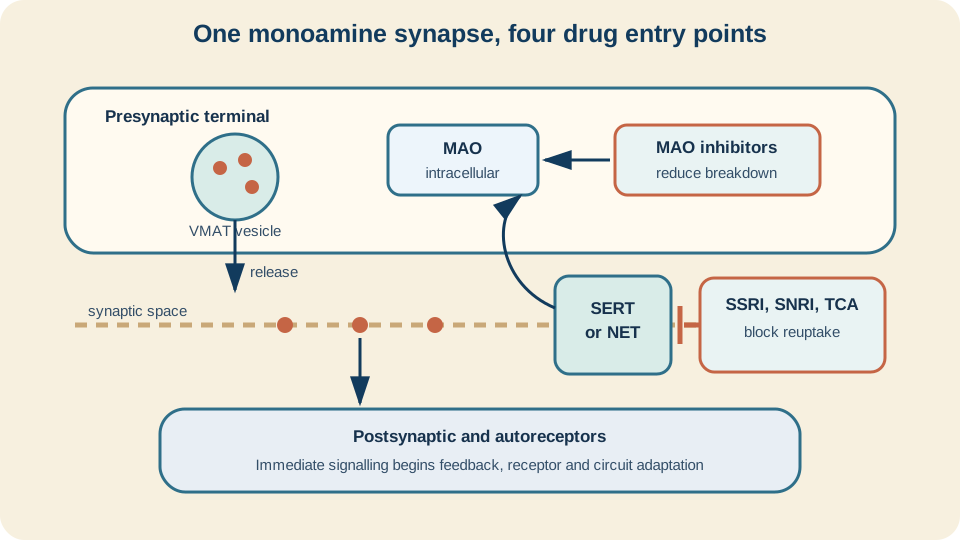
Reuptake inhibitors act at the plasma-membrane transporter; monoamine-oxidase inhibitors act on intracellular metabolism.
SimpleMed original educational diagram
Antidepressant Targets
Selective serotonin reuptake inhibitors inhibit SERT more strongly than NET at usual exposures. Serotonin and noradrenaline reuptake inhibitors inhibit both SERT and NET, although the balance varies between molecules and concentration. Tricyclic antidepressants also inhibit SERT and NET, but many additionally antagonise muscarinic acetylcholine, histamine H1 and alpha-1 adrenoceptors. Class names describe useful anchors, not perfectly identical pharmacology.
Off-target binding predicts much of the tricyclic burden. Muscarinic antagonism can reduce salivation, slow gut and bladder emptying, blur near vision and impair cognition. H1 antagonism supports sedation and appetite increase. Alpha-1 antagonism reduces vascular tone and can cause postural hypotension. Cardiac fast sodium-channel inhibition can slow conduction, a mechanism distinct from reuptake inhibition. A single molecule can therefore combine wanted transporter action with several receptor and ion-channel effects.
Monoamine-oxidase inhibitors reduce enzymatic monoamine breakdown rather than blocking the uptake transporter. MAO-A preferentially metabolises serotonin and noradrenaline as well as dopamine; MAO-B is important in dopamine metabolism and has different tissue distribution. Selectivity and reversibility differ between medicines. The shared lesson is that metabolism inhibition changes intracellular handling and available transmitter, so it is not equivalent to leaving one released pulse in the cleft for longer.
None of these mechanisms proves a simple rule that more monoamine instantly produces a complete clinical response. Transmitter availability, receptor occupancy and downstream circuit adaptation sit at different levels of explanation. The diagnosis, choice of medicine and stepped treatment belong in the psychiatry lessons; here the aim is to locate the molecular action accurately.
Dopamine Pathways and D2 Blockade
Four dopamine pathways organise introductory antipsychotic pharmacology. The mesolimbic pathway projects from the ventral tegmental area to limbic structures including the nucleus accumbens. The mesocortical pathway projects from the ventral tegmental area towards prefrontal cortex. The nigrostriatal pathway runs from substantia nigra pars compacta to dorsal striatum and participates in movement. The tuberoinfundibular pathway runs from hypothalamus towards the pituitary portal system, where dopamine normally restrains prolactin release.
D2 receptor antagonism is a central mechanism for many antipsychotic medicines, but location determines consequence. Mesolimbic D2 antagonism is linked to useful antipsychotic action. Nigrostriatal blockade disrupts dopamine-acetylcholine balance in motor circuits and predicts acute dystonia, akathisia, parkinsonism and, after prolonged exposure in susceptible people, tardive dyskinesia. Tuberoinfundibular blockade removes tonic prolactin inhibition and can cause hyperprolactinaemia.
Mesocortical function cannot be reduced to a claim that D2 blockade simply corrects every dopamine pathway. Dopamine signalling in cortex is more complex, and existing cognitive or negative symptoms may not follow the same rule as mesolimbic effects. Second-generation antipsychotics also have diverse affinities at D2, serotonin, histamine, muscarinic and adrenergic receptors. Some are partial D2 agonists. Treating them as one uniform receptor profile hides rather than explains their differences.
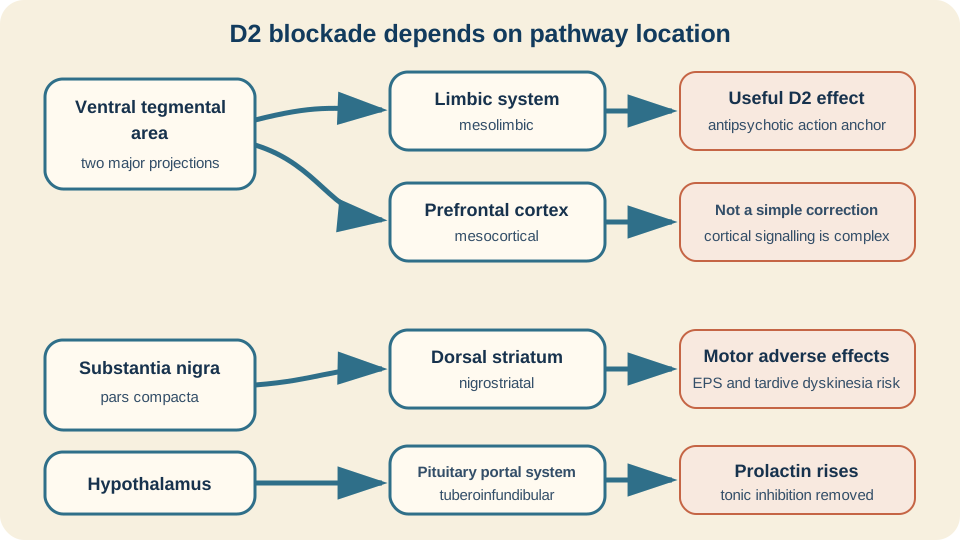
The same D2 blockade has different effects because each dopamine pathway serves a different circuit.
SimpleMed original educational diagram
GABA-A Modulation
GABA-A receptors are ligand-gated chloride channels assembled from several subunits. When GABA binds, channel opening usually increases chloride conductance and reduces the probability that a mature neurone will fire. Benzodiazepines bind at an allosteric site formed by selected alpha and gamma subunits. They increase the receptor response to GABA rather than occupying the GABA site or opening the channel efficiently on their own.
In the standard introductory comparison, benzodiazepines increase the frequency of GABA-associated channel opening, while barbiturates increase opening duration. Real receptor kinetics depend on subunit composition and drug, so the mnemonic is a teaching model rather than a complete molecular description. Enhanced inhibition predicts sedation, impaired coordination and memory effects. Combining inhibitory depressants can produce more dangerous depression than either alone because their actions converge on network excitability.
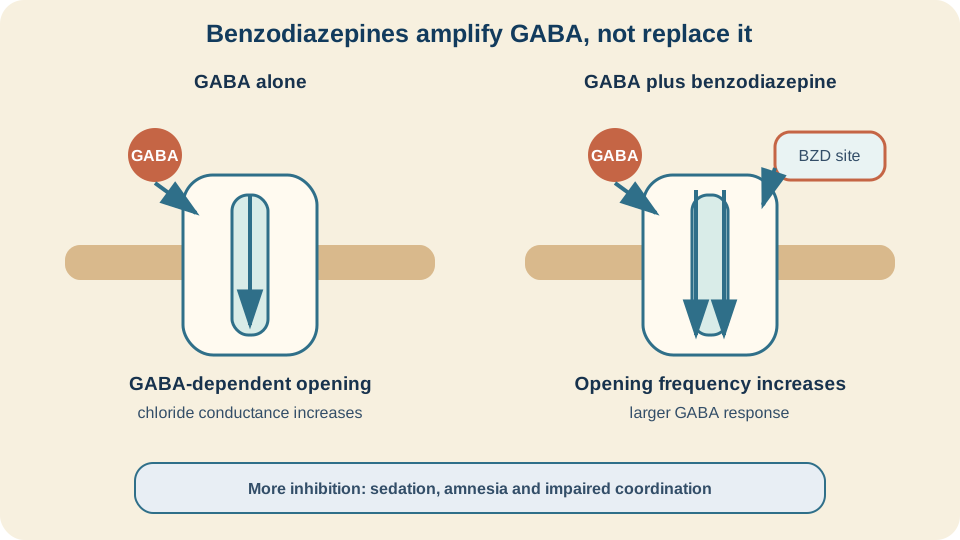
A benzodiazepine amplifies GABA-dependent channel activity; it is not a substitute transmitter.
SimpleMed original educational diagram
Lithium and Mood Stabilisation
Lithium is an ion with several intracellular actions, not a drug with one settled receptor target. Proposed mechanisms include effects on inositol signalling, glycogen synthase kinase 3, second-messenger systems, gene expression and neuronal plasticity. These observations support a network-level account, but no single mechanism should be presented as the complete explanation for mood stabilisation.
The inositol-depletion model illustrates why level of explanation matters. Lithium can inhibit inositol monophosphatase and related phosphatases, potentially limiting recycling of inositol used for phosphoinositide signalling. Lithium also influences glycogen synthase kinase 3 directly and indirectly. Both observations are experimentally useful, yet each sits upstream of many cell responses and neither maps neatly onto one mood circuit. A biochemical effect can be real without being the sole therapeutic mechanism.
Other medicines described as mood stabilising do not become mechanistically identical to lithium. Valproate affects ion channels and inhibitory signalling among several actions; lamotrigine chiefly alters voltage-gated sodium-channel-dependent transmitter release in the standard introductory model. Their indications, risks and monitoring are clinical topics outside this lesson. The useful pre-clinical point is that a shared therapeutic label can contain distinct molecular starting points.
Drug Action and Network Adaptation
Target engagement can be measured within minutes or hours. A reuptake transporter is inhibited, a D2 receptor is occupied or GABA-A signalling is enhanced. Some consequences are equally early, including sedation, nausea, motor effects or altered arousal. Other effects emerge as feedback systems adjust. Autoreceptors can desensitise, postsynaptic receptor signalling can change, and transcriptional or synaptic-plasticity programmes can reshape circuit responses.
Therapeutic delay is therefore not an excuse to claim that a drug is inactive until a fixed date. Onset varies with medicine, outcome and person. Nor does adaptation prove one universal downstream pathway. It means that molecular action and experienced clinical change are observations at different levels and timescales. Good mechanism language separates established target pharmacology from plausible, still incomplete explanations of delayed benefit.
This separation also prevents a common reasoning error. Early nausea after SERT inhibition and later change in mood do not require the same receptor population or circuit, even though both began with exposure to one medicine. Likewise, rapid sedation from H1 antagonism does not show that the slower intended response has already occurred. Time course is evidence about mechanism, not merely a waiting instruction.
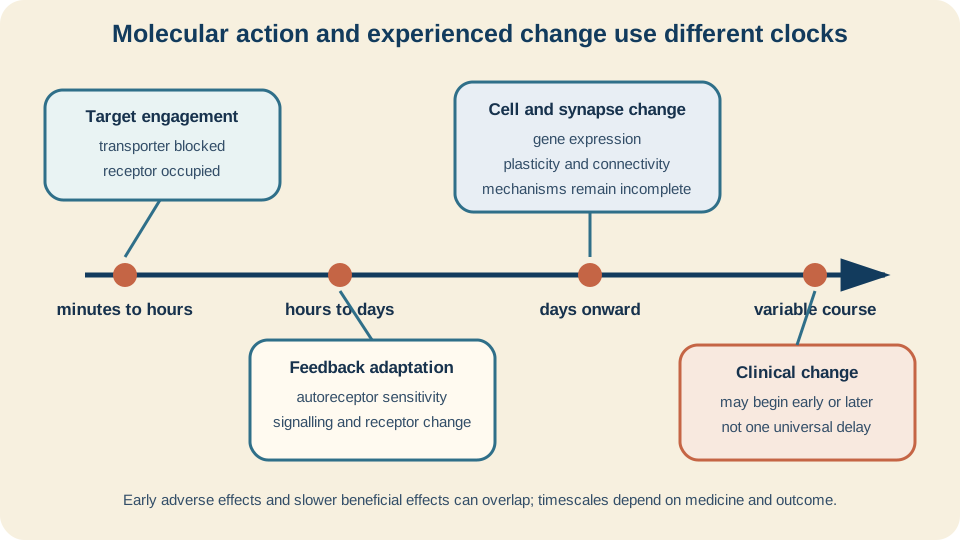
Target engagement begins the process; feedback and network adaptation unfold on overlapping, variable timescales.
SimpleMed original educational diagram
Tolerance, Dependence and Withdrawal
Tolerance means that repeated exposure produces less effect at the same concentration, or that more exposure is needed for a similar effect. Mechanisms can include receptor regulation, altered coupling, metabolism or learned adaptation, and tolerance need not develop equally to every effect. Physical dependence means the adapted system now responds to drug removal with a withdrawal state. It can occur during medically supervised exposure and is not itself the behavioural syndrome of addiction.
Withdrawal is the set of effects that follows reduction or cessation in a dependent system. Rebound excitation after sustained enhancement of GABAergic inhibition is a clear model: opposing adaptations are unmasked when the enhancer is removed. The pattern depends on drug kinetics, exposure and the adaptation involved. These definitions explain why abrupt change can matter mechanistically without turning this foundation lesson into individual treatment advice.
Deriving Adverse Effects
Adverse effects should be derived from targets wherever possible. H1 antagonism predicts sedation and appetite increase; muscarinic antagonism predicts dry mouth, blurred near vision, constipation and urinary retention; alpha-1 antagonism predicts postural hypotension. D2 blockade in nigrostriatal and tuberoinfundibular pathways predicts motor and prolactin effects. GABA-A enhancement predicts sedation, amnesia and impaired coordination. Transporter inhibition can create early autonomic and gastrointestinal effects before slower adaptation is complete.
The reusable sequence is: identify the molecular target, locate it in a synapse or pathway, predict the immediate cell effect, then ask how feedback and repeated exposure reshape the network. Keep confidence proportional to evidence. Target binding may be well established while the full chain to delayed clinical benefit remains incomplete. That distinction turns psychopharmacology from a catalogue into a physiological map and prepares the mechanism framework for Epilepsy and Anti-epileptic Drugs.
Reviewed by: Dr. Marcus Judge
- 130