
Next Lesson - Hypertension and Heart Failure
Core
The Adrenergic Terminal
Adrenergic pharmacology becomes manageable when every drug is placed on one map. Most sympathetic postganglionic terminals release noradrenaline. Tyrosine enters the neurone and tyrosine hydroxylase converts it to L-DOPA, the rate-limiting biosynthetic step. Aromatic L-amino-acid decarboxylase forms dopamine in the cytosol. Vesicular monoamine transporter (VMAT) then carries dopamine into acidic storage vesicles, where dopamine beta-hydroxylase forms noradrenaline. In adrenal chromaffin cells, phenylethanolamine N-methyltransferase can convert noradrenaline to adrenaline.
An arriving action potential opens voltage-gated calcium channels. Calcium triggers vesicle fusion and noradrenaline release. Released transmitter can activate postsynaptic adrenoceptors or presynaptic alpha-2 autoreceptors. The autoreceptor provides negative feedback: Gi signalling lowers transmitter release, partly by reducing calcium-channel activity and increasing potassium conductance.
Synthesis and release operate on different timescales. Tyrosine hydroxylase governs new catecholamine supply, but a single action potential mainly draws from transmitter already packaged in vesicles. After release, rapid NET retrieval and VMAT reloading conserve noradrenaline that would otherwise need to be rebuilt. Strong or repeated stimulation increases demand on synthesis, transport and vesicular reserve together. This distinction matters pharmacologically: inhibiting synthesis limits replacement, inhibiting VMAT limits protected storage, and blocking exocytosis prevents release despite a full vesicle.
At a sympathetic nerve junction, the main rapid termination route is neuronal reuptake through the norepinephrine transporter (NET). Recovered noradrenaline can return to vesicles through VMAT or meet mitochondrial monoamine oxidase (MAO) in the cytosol. Catechol-O-methyltransferase (COMT) is important outside the neurone and in the wider metabolism of circulating catecholamines. Do not draw COMT as though it were the chief enzyme floating in the synaptic cleft. Reuptake ends most local noradrenergic signals; metabolism completes disposal in neuronal and extraneuronal compartments.
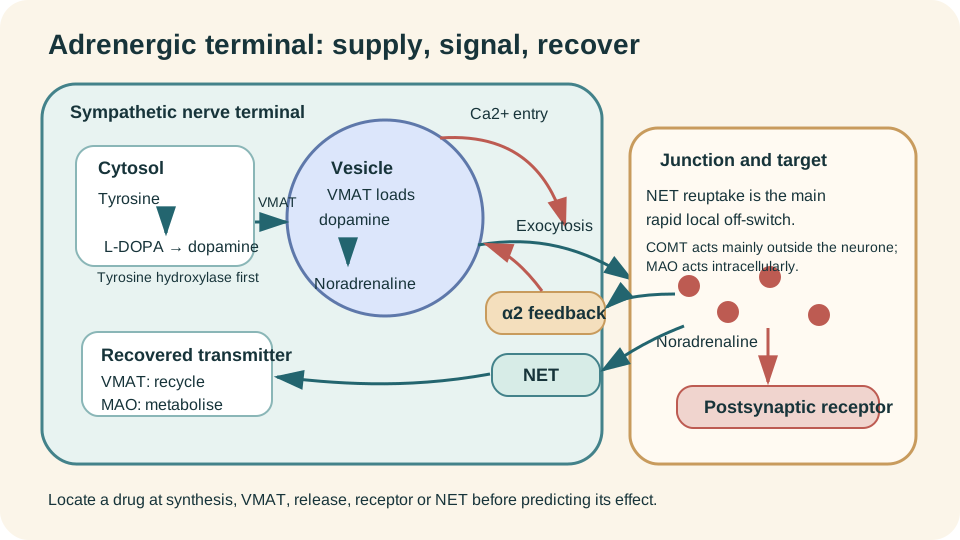
At the sympathetic junction, synthesis and vesicular recycling supply noradrenaline while NET reuptake ends most local signalling.
SimpleMed original educational diagram
Three G-protein Rules
All adrenoceptors are G-protein-coupled receptors, but three predominant couplings organise the family. Alpha-1 is mainly Gq: phospholipase C generates IP3 and DAG, intracellular calcium rises, and smooth muscle commonly contracts. Alpha-2 is mainly Gi: adenylyl cyclase activity and cAMP fall, supporting presynaptic inhibition and several postsynaptic effects. Beta-1, beta-2 and beta-3 are mainly Gs: adenylyl cyclase and cAMP rise.
The same second messenger does not guarantee the same organ response. In cardiac myocytes, beta-1-driven cAMP increases calcium entry and calcium cycling, so rate, conduction and force can rise. In airway smooth muscle, beta-2-driven cAMP activates protein kinase A and reduces myosin light-chain kinase activity, favouring relaxation. Always combine signalling with cell type.
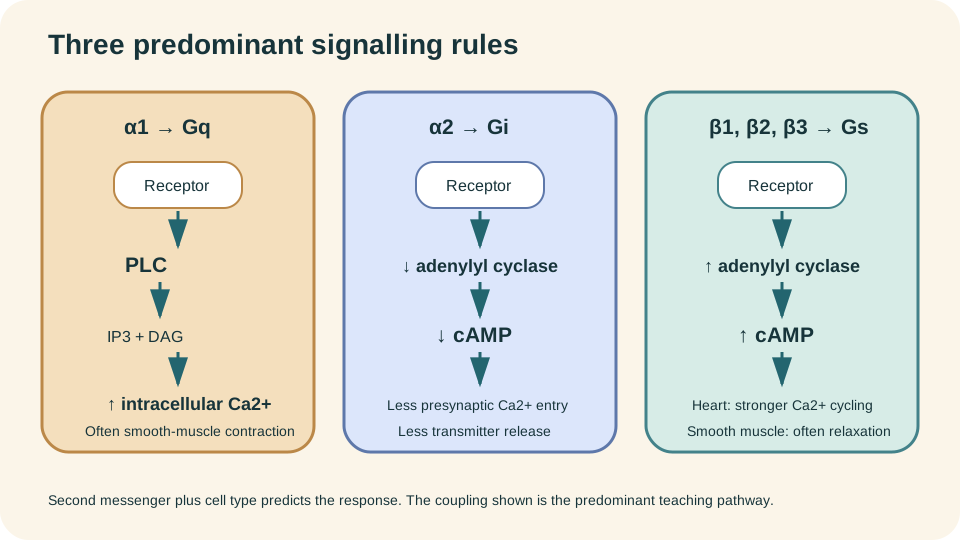
Memorise the predominant coupling, then ask what cAMP or calcium does in that particular cell.
SimpleMed original educational diagram
Receptor Location Predicts Effect
Alpha-1 receptors are prominent on vascular smooth muscle, the radial muscle of the iris and smooth muscle at the bladder outlet. Their Gq-calcium signal favours contraction, predicting vasoconstriction, mydriasis and increased outlet tone. Alpha-2 receptors occur presynaptically and in central autonomic pathways, where activation reduces sympathetic transmitter output. They also occur postsynaptically in sites including pancreatic islets and platelets, so the shorthand "presynaptic only" is unsafe.
Beta-1 receptors are important in the sinoatrial node, atrioventricular node, myocardium and juxtaglomerular cells. Activation can increase heart rate, conduction, contractility and renin release. Beta-2 receptors are prominent in airway, uterine and selected vascular smooth muscle. Their Gs-cAMP pathway usually relaxes those tissues. Beta-2 activation also supports metabolic responses and drives potassium into skeletal muscle, explaining why a receptor used for bronchodilation can also produce tremor, tachycardia or hypokalaemia.
Beta-3 receptors are relevant in human detrusor muscle, where activation favours bladder relaxation during storage. They also participate in adipose biology, although human metabolic effects should not be reduced to a single memorised word. Receptor expression overlaps between tissues, so these are predictive anchors rather than exclusive addresses.
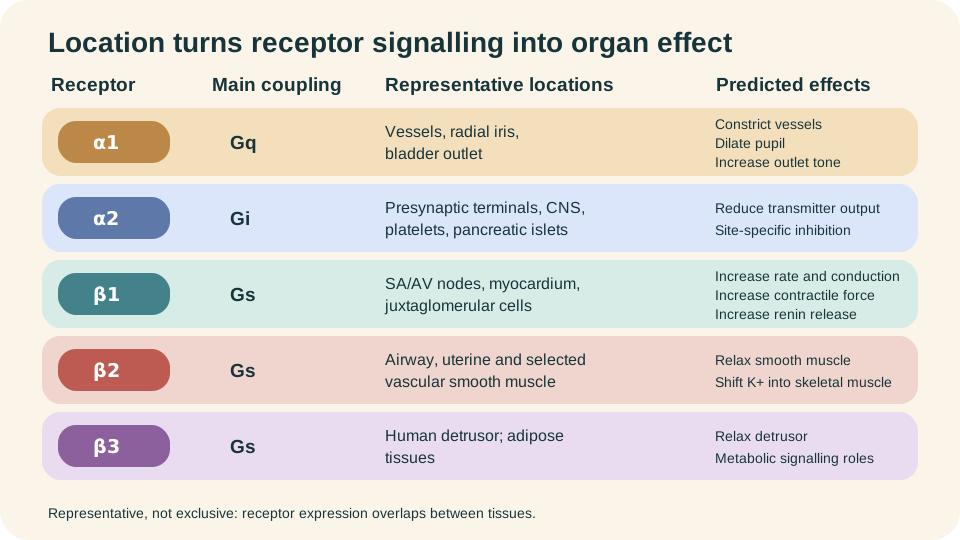
Receptor location turns a signalling pathway into an organ response; overlap explains many off-target effects.
SimpleMed original educational diagram
Direct Agonists
A direct agonist binds and activates an adrenoceptor. Phenylephrine is relatively alpha-1 selective, so vascular smooth-muscle contraction and a rise in total peripheral resistance are predictable. Clonidine and dexmedetomidine activate alpha-2 receptors; central and presynaptic inhibition explains reduced sympathetic output and sedation better than calling them general sympathetic stimulants.
Dobutamine is used as a predominantly beta-1 agonist example: direct cardiac beta-1 activation increases cAMP and calcium cycling. Salbutamol is relatively beta-2 selective, linking airway smooth-muscle relaxation to tremor and potassium shift when systemic exposure increases. Mirabegron provides a beta-3 example at detrusor muscle. Adrenaline activates alpha and beta receptor families, so its net response depends on concentration, access, tissue receptor expression and the starting physiological state. Drug names are examples attached to a receptor rule, not a list to learn without mechanism.
Indirect and Mixed Sympathomimetics
An indirect sympathomimetic increases adrenergic signalling without needing to act as the main receptor agonist. One route is NET inhibition, which keeps released noradrenaline outside the neurone for longer. Another is entry through NET followed by interference with vesicular storage and outward transmitter transport. Tyramine and amphetamine-related mechanisms illustrate transmitter displacement and transporter-dependent release, although their detailed actions are not identical. Because these drugs depend on an intact terminal and available stores, their behaviour differs from a direct agonist applied to a denervated tissue.
Transport direction and compartment are essential. NET normally uses transmembrane ion gradients to move noradrenaline from the junction into the cytosol. VMAT then moves cytosolic monoamine into an acidic vesicle. An indirect substrate can exploit these transporters and alter the normal direction of traffic, whereas a reuptake inhibitor occupies NET and delays clearance without itself needing to empty a vesicle. Both can raise extracellular transmitter, but they reach that endpoint by different steps and will respond differently to depleted stores or transporter loss.
A mixed-acting sympathomimetic combines direct receptor activation with increased noradrenaline availability. Ephedrine is the standard teaching example. The distinction predicts tachyphylaxis: repeated closely spaced exposure to a store-dependent indirect component can produce a diminishing response as readily releasable transmitter becomes less available. A purely direct agonist does not require endogenous noradrenaline stores to activate its receptor.
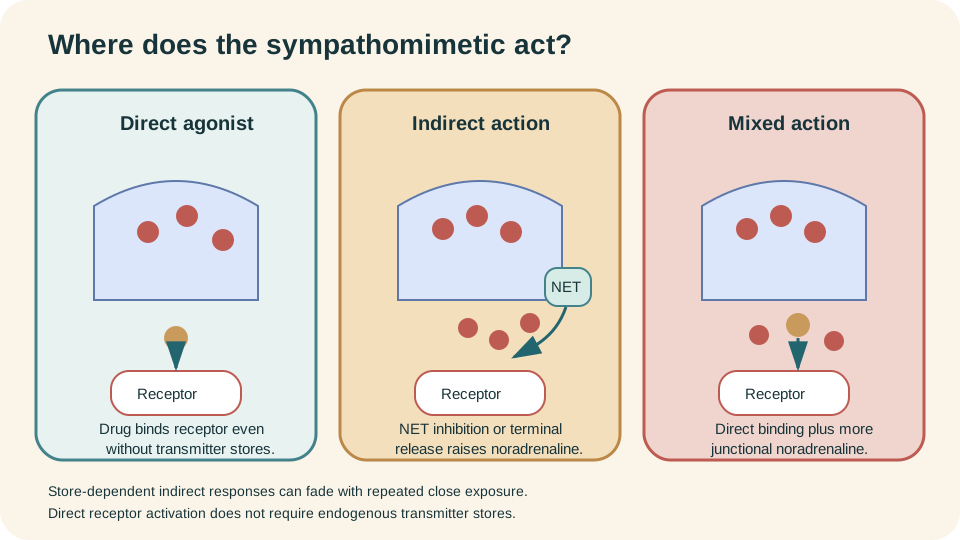
Direct drugs activate the receptor; indirect drugs raise junctional transmitter; mixed drugs use both routes.
SimpleMed original educational diagram
Adrenergic Antagonists
Antagonists reveal the same map in reverse. Alpha-1 blockade reduces smooth-muscle contraction, so vasodilation and postural hypotension follow directly from receptor location. A selective alpha-1A antagonist can reduce bladder-outlet tone with less vascular effect than a non-selective alpha-1 blocker, but subtype selectivity remains relative.
Beta antagonists differ in receptor coverage and additional properties. Propranolol blocks beta-1 and beta-2 receptors, so reduced cardiac stimulation travels with loss of beta-2 bronchodilator and metabolic support. Bisoprolol and metoprolol are relatively beta-1 selective at appropriate exposure, not beta-1 exclusive. Labetalol and carvedilol combine beta blockade with alpha-1 antagonism. Their clinical selection belongs in system pharmacology; here the key task is to predict the organ effects removed by each receptor block.
Selectivity Is Relative
Selectivity compares affinity or potency at one receptor with another. It is not a wall. At a concentration that substantially occupies a high-affinity intended target, occupancy of lower-affinity receptors may still be small. As free concentration rises, lower-affinity receptors become more engaged and the clinical advantage of selectivity narrows. This is why a beta-1-selective antagonist can still provoke beta-2 blockade at higher exposure, and why systemic salbutamol can produce cardiac or metabolic effects despite useful beta-2 preference.
Do not turn the concept into one universal high-dose rule. Each drug has its own affinity, efficacy, distribution and active-metabolite profile. Disease can also change receptor number or physiological reserve. The safe general prediction is narrower: increasing concentration usually widens receptor occupancy, so expected effects should be rechecked beyond the preferred target.
Potency, efficacy and selectivity should also remain separate. Potency asks how much drug produces a chosen response; efficacy asks the maximum response that system can produce; selectivity compares activity at different targets. A left-shifted preferred-target curve shows potency at that receptor, but says nothing about safety until the relevant off-target curve is known. Receptor reserve can further separate occupancy from measured effect, so a conceptual graph is a reasoning aid rather than a dosing chart.
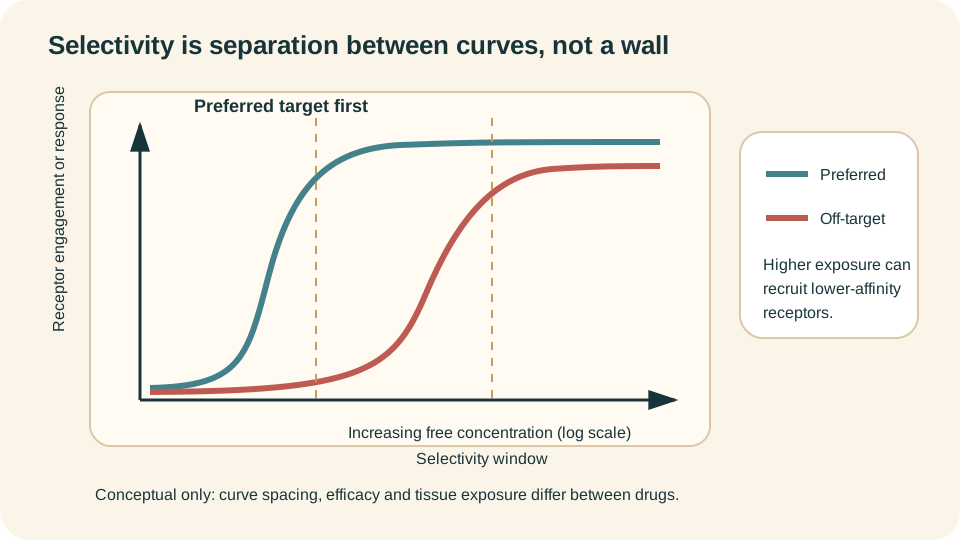
Selectivity is a separation between curves, not an absolute border; higher exposure can recruit off-target receptors.
SimpleMed original educational diagram
Reflexes and Adverse Effects
A direct receptor effect can trigger an opposing reflex. Alpha-1-mediated arteriolar constriction raises total peripheral resistance and arterial pressure. Arterial baroreceptor firing then rises, increasing vagal and reducing sympathetic drive to the heart. Heart rate may therefore fall even though the drug belongs to the sympathomimetic family. Conversely, beta-2-mediated vasodilation can lower resistance and recruit reflex tachycardia. The final pulse is the vector sum of direct cardiac action and the baroreflex, not a label attached to the drug class.
Mechanism also predicts adverse effects. Excess alpha-1 activation can produce hypertension and tissue ischaemia through vasoconstriction. Alpha-2 agonism can cause bradycardia, hypotension, dry mouth and sedation through reduced central or peripheral sympathetic output. Beta-1 activation can cause tachycardia and arrhythmia; beta-1 blockade can cause bradycardia or conduction slowing. Beta-2 activation can cause tremor, tachycardia and hypokalaemia, while beta-2 blockade can provoke bronchoconstriction in susceptible airways. Mixed or indirect sympathomimetics can combine cardiovascular and central effects because they widen the transmitter signal rather than selecting one organ.
Use the same sequence every time: locate the synapse, identify direct or indirect action, name the receptor and predominant G protein, predict the cell response, then add reflex compensation and concentration-dependent loss of selectivity. That method converts adrenergic pharmacology from a drug list into a reusable physiological model and prepares the receptor framework for Hypertension and Heart Failure.
Reviewed by: Dr. Marcus Judge
- 120