
Next Lesson - Glycolysis
Core
Cofactors Make Enzymes Work
An enzyme's amino-acid side chains cannot perform every chemical reaction alone. A cofactor is a non-protein helper that enables a reaction by carrying electrons or chemical groups, stabilising charge, orienting a substrate or participating directly in catalysis. The protein without its required cofactor is an apoenzyme; the active combination is a holoenzyme. Some helpers bind tightly as prosthetic groups, while others enter, change state and leave to be regenerated elsewhere.
Coenzyme usually means an organic cofactor. Many vitamins are dietary precursors from which cells make coenzymes: riboflavin becomes FMN and FAD, niacin becomes NAD and NADP, and pantothenate forms part of coenzyme A. Inorganic ions form the other major group. Magnesium commonly organises phosphate-rich substrates, while zinc or copper can sit within an enzyme's catalytic or structural centre. Not every vitamin is a coenzyme: vitamins A and D also act through receptors and gene regulation, and iodine becomes part of thyroid hormone. The cofactor model is a powerful starting point, not a rule that erases these exceptions.
Cofactors are reused, but their availability still limits pathway capacity. A reaction may slow because too little cofactor reaches the enzyme, because a precursor cannot be converted into its active form, or because the cofactor cannot be regenerated after accepting electrons or a chemical group. The enzyme protein may be present and structurally normal throughout. This explains why micronutrient deficiency can resemble an inherited enzyme defect: both reduce flux through the same biochemical step, although one removes a helper and the other changes the protein itself.
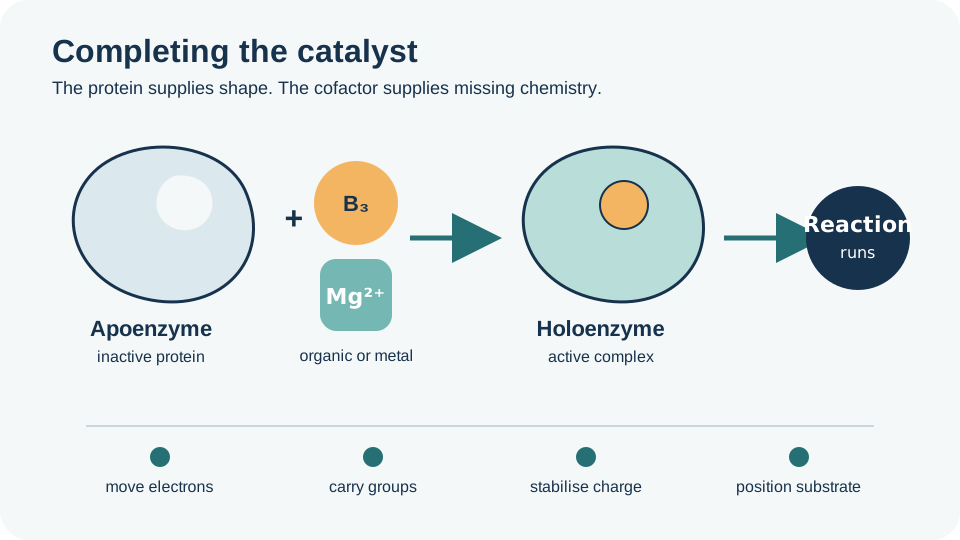
A cofactor completes the reaction machinery by moving electrons or groups, stabilising charge, or positioning substrate.
SimpleMed original educational diagram
Solubility Controls Handling
Solubility predicts how a vitamin reaches tissues and how quickly imbalance may appear. Water-soluble B vitamins and vitamin C enter aqueous body compartments after intestinal absorption. Limited storage and renal loss make regular supply important for many of them, although vitamin B12 is a clinically important exception because substantial hepatic stores can delay deficiency. Water solubility also does not guarantee safety: sufficiently high or prolonged exposures can still cause harm.
Fat-soluble vitamins A, D, E and K travel with dietary lipid. They require micelle formation, intestinal uptake and packaging into lipoprotein particles before distribution. Cholestasis, pancreatic insufficiency or extensive small-bowel disease can therefore reduce several fat-soluble vitamins together. Longer retention in liver and adipose tissue can buffer a short interruption, but it also allows some forms to accumulate when exposure is excessive. The useful contrast is handling and storage, not the shortcut that one group is safe and the other dangerous.
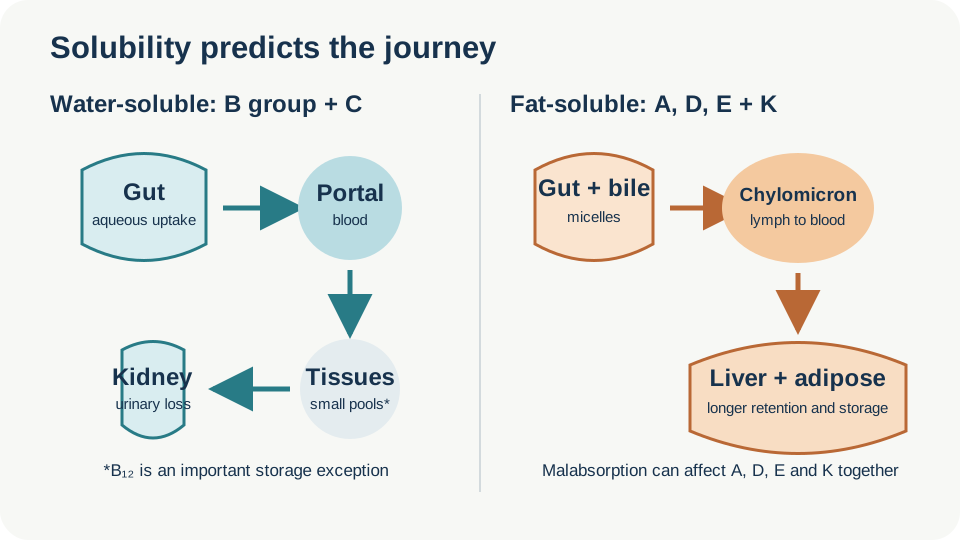
Water and lipid solubility shape absorption, transport, storage, loss and the tempo of deficiency or accumulation.
SimpleMed original educational diagram
B Vitamins on the Metabolic Map
Learn B vitamins by the work their active forms perform. In fuel oxidation, thiamine (B1) becomes thiamine pyrophosphate, which supports oxidative decarboxylation at pyruvate dehydrogenase and other alpha-ketoacid complexes, as well as transketolase in the pentose phosphate pathway. Riboflavin (B2) supplies FMN and FAD, electron carriers used by flavoproteins. Niacin (B3) supplies NAD and NADP: NAD commonly receives electrons in catabolic pathways, while NADPH commonly donates reducing power to biosynthesis and antioxidant systems. Pantothenate (B5) forms part of coenzyme A, the carrier of activated acyl groups such as acetyl-CoA.
A second group handles carbon and nitrogen. Pyridoxal phosphate from vitamin B6 supports aminotransferases and many other amino-acid reactions. Biotin is covalently attached to carboxylases and carries activated carbon dioxide, including pyruvate carboxylase and acetyl-CoA carboxylase. Folate coenzymes transfer one-carbon units, while vitamin B12 supports linked rearrangement and methyl-transfer reactions. Their detailed absorption, blood findings and neurological distinctions belong in Vitamin B12 and Folate. Here the key is functional: remove a coenzyme and every dependent reaction loses capacity, so high-flux tissues reveal the shortfall first.
Two contrasts prevent common pathway errors. NAD and NADP are mobile cosubstrates whose oxidised and reduced forms shuttle reducing equivalents between reactions; FAD is often held more tightly within a flavoprotein. Coenzyme A carries an acyl group without becoming the carbon fuel itself. Likewise, biotin adds carbon dioxide during carboxylation, whereas thiamine pyrophosphate helps remove carbon dioxide from alpha-ketoacids. Naming the transferred cargo is more reliable than memorising vitamin numbers in isolation.
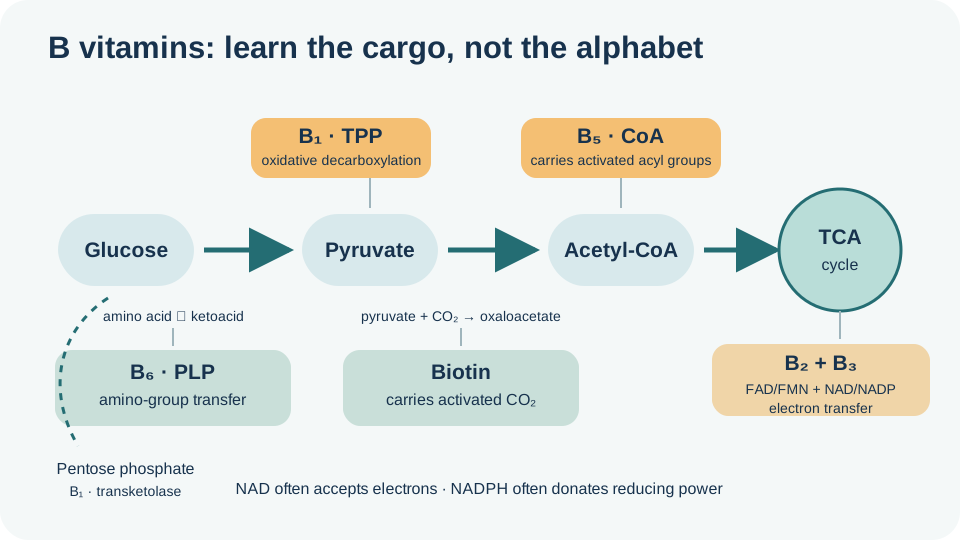
Map the B vitamins to reaction types: oxidative decarboxylation, electron transfer, acyl transfer, amino-group transfer and carboxylation.
SimpleMed original educational diagram
Vitamin C and Collagen
Vitamin C is a water-soluble reducing agent and enzyme cofactor. In collagen synthesis it helps maintain iron in the reduced state required by prolyl and lysyl hydroxylases. Hydroxylated residues stabilise the collagen triple helix and support later cross-linking. Deficiency therefore predicts fragile connective tissue: impaired wound integrity, perifollicular bleeding and gum changes arise from a structural protein that was made but not matured normally. The full synthesis sequence belongs in Post-translational Modification and Collagen Biosynthesis.
Vitamin C also contributes to aqueous antioxidant chemistry and improves absorption of non-haem iron by favouring a more absorbable reduced form. That is a functional connection, not a replacement for the transport and storage system taught in Iron Metabolism.
Fat-soluble Vitamins, Four Different Jobs
The shared absorption route of A, D, E and K should not make their functions blur together. Vitamin A supplies retinal for the visual cycle and retinoic acid for nuclear-receptor control of epithelial differentiation and development. Vitamin D is converted to a hormone-like active form that supports calcium and phosphate absorption and bone mineralisation; its regulatory physiology is developed in Calcium Metabolism. Vitamin E, especially alpha-tocopherol, interrupts lipid peroxidation chains in membranes, protecting long-lived neural and red-cell membranes from oxidative injury. The wider redox framework belongs in Oxidative Stress.
Vitamin K is a cofactor for gamma-glutamyl carboxylase. Carboxylation gives selected clotting and bone proteins calcium-binding capacity. Deficiency therefore reduces function even when the protein backbone has been synthesised. This lesson stops at the cofactor step; the coagulation cascade belongs in Haemostasis and Clotting.
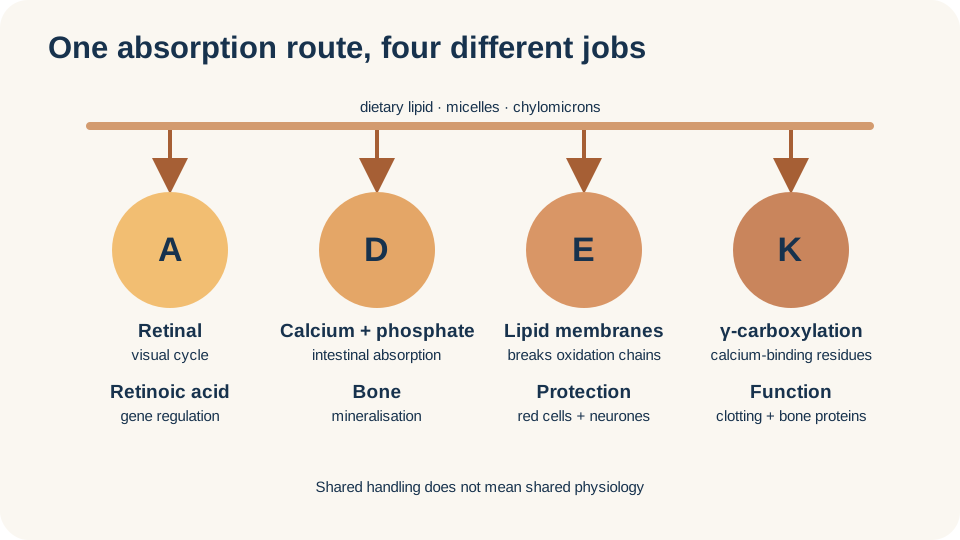
A, D, E and K share lipid handling but not purpose: receptor signalling, mineral control, membrane defence and protein carboxylation.
SimpleMed original educational diagram
Minerals and Trace Elements
Magnesium is required in larger amounts than classical trace elements. It complexes with ATP, so many enzymes recognise Mg-ATP rather than bare ATP, and it supports nucleic-acid synthesis, ion transport and neuromuscular stability. Zinc can be catalytic, structural or regulatory: it supports hundreds of enzymes, stabilises zinc-finger DNA-binding domains and contributes to growth, immune function, taste and wound repair.
Copper cycles between oxidation states in redox enzymes. Copper-dependent proteins contribute to iron handling, mitochondrial electron transfer, antioxidant defence and lysyl oxidase cross-linking of collagen and elastin. Selenium is inserted as selenocysteine into selenoproteins, including glutathione peroxidases and thyroid-hormone deiodinases. Iodine is different again: it is incorporated into thyroxine and triiodothyronine, making trace-element supply part of hormone structure rather than a detachable enzyme helper.
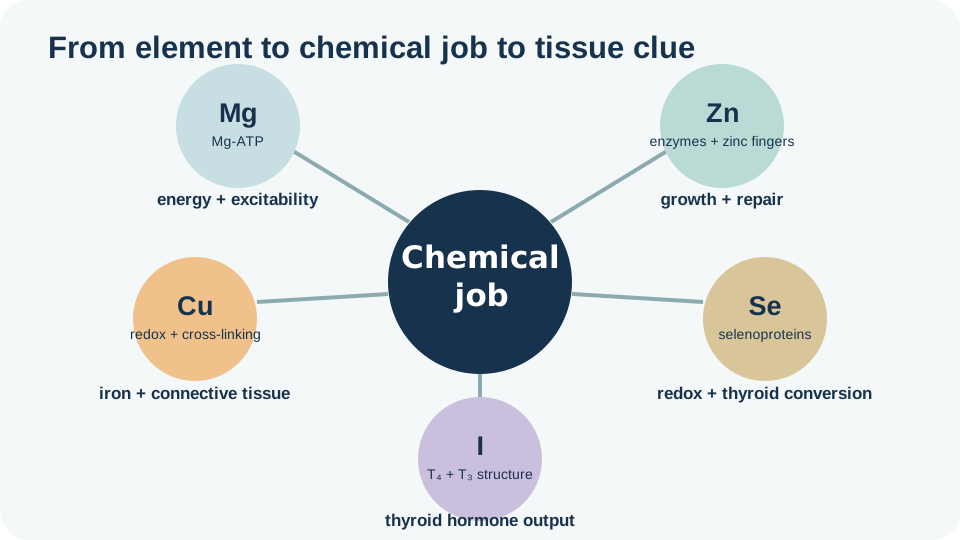
Each element occupies a chemical job; deficiency clues follow the high-demand processes and tissues that lose that job.
SimpleMed original educational diagram
Predicting Deficiency and Toxicity
A deficiency syndrome is a causal chain. First ask why effective supply fell: low intake, impaired absorption, failed activation, increased loss, increased demand or competition from another nutrient. Next name the missing active form, then the reaction that loses capacity. Finally identify tissues that depend heavily on that reaction. Rapidly dividing marrow and epithelium expose failed biosynthesis; brain and heart expose impaired energy metabolism; connective tissue exposes defective collagen maturation; thyroid function exposes inadequate iodine or selenium-dependent hormone processing.
Risk patterns often affect groups rather than single nutrients. Severe dietary restriction or alcohol dependence can reduce intake and activation of several water-soluble cofactors. Bariatric surgery and small-bowel disease can combine low intake with malabsorption. Cholestasis and pancreatic disease particularly threaten fat-soluble absorption. Pregnancy, growth and recovery increase demand. A normal circulating concentration can also be an incomplete guide when most nutrient is intracellular or when inflammation shifts distribution.
Timing adds another clue. A small, rapidly exchanging pool can uncover reduced intake quickly, while a large hepatic reserve delays symptoms until stores have fallen substantially. Tissue turnover also sets the order of presentation. Biochemical activity may decline before a structural tissue is visibly abnormal, but once a long-lived membrane, myelin pathway or collagen network is damaged, restoring substrate does not imply instant repair. Deficiency severity therefore reflects both pathway flux and duration, not a nutrient name alone.
Toxicity uses the same mechanism-first logic. Retained fat-soluble compounds may accumulate; excessive vitamin B6 can injure sensory nerves despite being water soluble; too much zinc can impair copper status through intestinal competition; and excessive as well as insufficient iodine can disturb thyroid function. More is not synonymous with more enzyme activity because binding sites saturate, homeostatic transport changes and off-target chemistry appears. This article explains the map, not supplement doses or treatment.
The final method is compact: classify the helper, locate its reaction, predict the vulnerable process, then check handling and exposure. That sequence turns a long nutrient list into biochemical reasoning and prepares the pathway-block model used later in inborn errors of metabolism.
Reviewed by: Dr. Marcus Judge
- 157