
Next Lesson - The Immunocompromised Host
Core
The Eukaryotic Targeting Problem
Fungi and parasites are eukaryotic pathogens. Like human cells, they package DNA in a nucleus, run translation on ribosomes, and organise metabolism through membrane-bound organelles. That shared cellular grammar is the teaching spine of this lesson. When a pathogen is a prokaryote, many essential structures (for example a peptidoglycan wall or 70S ribosome architecture) differ sharply from the host. When the pathogen is a eukaryote, the number of truly unique essential targets shrinks, so selective toxicity becomes harder without implying that treatment is impossible.
The practical consequence is not therapeutic nihilism. It is a demand for careful reasoning: useful selectivity often sits in structures humans lack (a fungal wall) or in sterols and pathways that diverge enough to be exploitable, while residual shared machinery limits how clean that selectivity can be. Morphological form, lifecycle stage, anatomical site and immune status then predict both disease pattern and the diagnostic specimen that is worth taking. Immune failure as a broad clinical map belongs in The Immunocompromised Host; here, host defence is a predictor of pattern, not a second full lesson.
Fungal Cell, Morphology and Selective Targets
A fungal cell is a true eukaryote with a nucleus, organelles and a plasma membrane. Outside that membrane sits a multi-component cell wall that human cells do not possess. The wall is not a single polymer. A simplified but accurate map includes chitin, beta-glucans that form much of the structural scaffold, and outer mannoprotein-rich material; exact layering and composition vary among fungi and with growth conditions. Because humans lack this wall, wall assembly is a relatively selective principle. Fungal membranes generally use ergosterol where human membranes use cholesterol. That sterol difference supports membrane- and ergosterol-pathway targeting as a second principle class. Selectivity is real but incomplete: fungi and humans still share eukaryotic protein synthesis, nucleic-acid handling and many metabolic routes, so wall and sterol differences narrow risk rather than erase it.
Morphology is a state, not a species name. Yeasts are unicellular fungi that typically reproduce by budding. Moulds grow as filamentous hyphae that branch into a mycelium. Classical thermal dimorphism describes pathogens that exist as mould in the environment and convert to a tissue form under host conditions. Prevent two false rules. First, tissue form is not always a yeast: Coccidioides characteristically forms spherules in tissue. Second, Candida can switch among yeast, pseudohyphae and hyphae; that polymorphism is related to form plasticity but is not identical to the classical environmental-mould/tissue-form pattern.
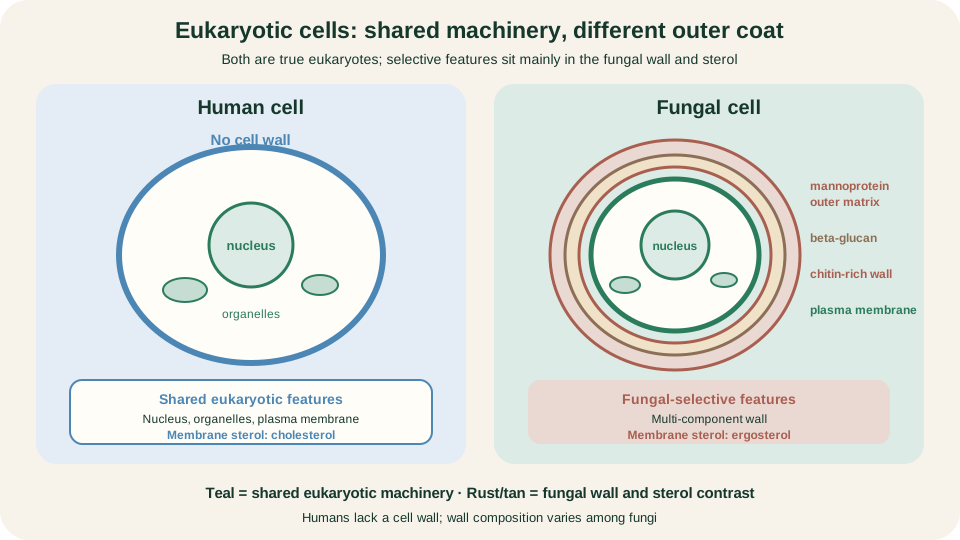
Both cells are eukaryotic; the fungal wall and ergosterol create selective contrast against a wall-free, cholesterol-using human cell.
SimpleMed original educational diagram
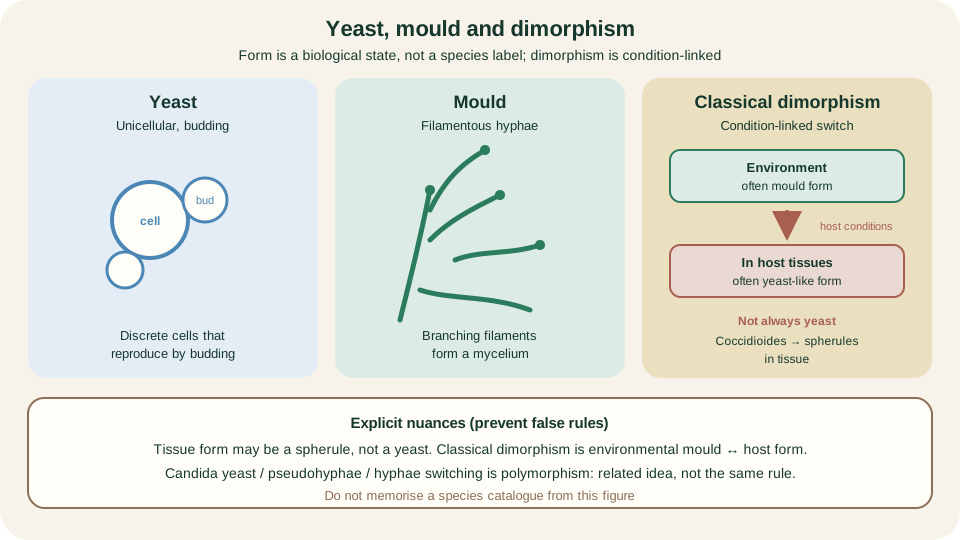
Yeast and mould are morphological states; classical dimorphism is condition-linked, with explicit spherule and Candida polymorphism nuances.
SimpleMed original educational diagram
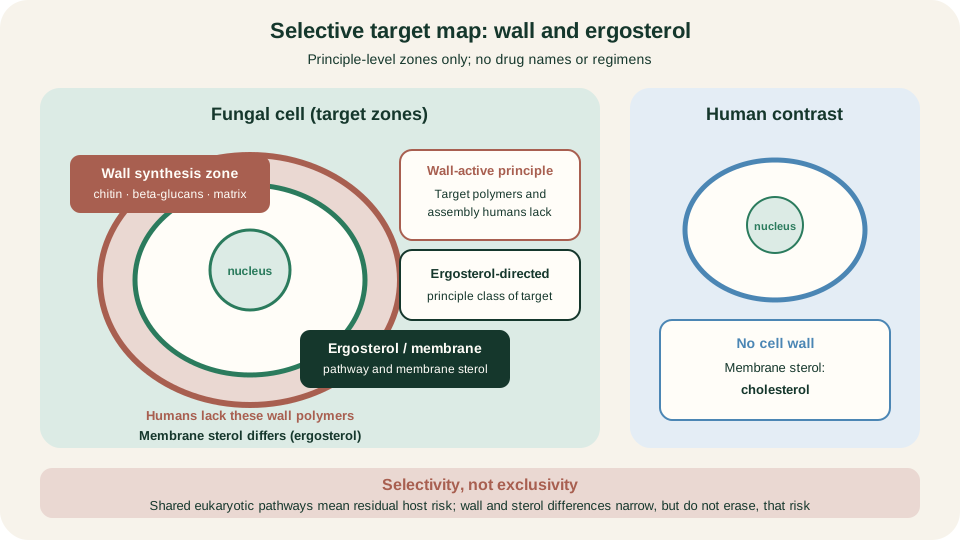
Wall synthesis and ergosterol pathways are relatively selective zones; shared eukaryotic machinery means selectivity, not exclusivity.
SimpleMed original educational diagram
Fungal Disease Patterns
Three patterns organise common fungal disease better than a genus list. Dermatophytes occupy a superficial keratin niche: they exploit keratinised skin, hair and nails. Site names such as tinea describe anatomy, not a requirement to memorise every species. The teaching point is ecological: organisms adapted to keratinised surfaces produce superficial disease when they establish there, rather than a deep systemic programme by default.
Candida is typically a commensal on mucosal surfaces and skin. Colonisation is not infection. Disease emerges when the balance shifts: microbiome disruption (for example after broad antibacterial exposure), barrier breach (devices, surgery, maceration) or immune change can allow overgrowth and, in some settings, invasion. Mucosal overgrowth and invasive disease are related but not identical problems; the same organism can sit harmlessly until context changes. Link severe immunodeficiency patterns forward to The Immunocompromised Host and, where relevant, to Human Immunodeficiency Virus without importing those articles' full clinics here.
Aspergillus illustrates an inhalation pattern. Conidia are inhaled routinely from the environment; healthy airway and innate defences, including neutrophil function, usually clear them. Invasive hyphal growth is therefore shaped strongly by host defence failure rather than by mere exposure. Do not convert this paragraph into a management pathway or a full neutrophil-defect atlas; the mechanism is that form (conidium versus invasive hypha) plus host competence decide whether inhalation remains trivial or becomes deep infection.
Protozoa versus Helminths
Parasitic eukaryotes split usefully into two structural classes. Protozoa are unicellular. Many can multiply within a single host, so a small inoculum may expand into a large population through repeated binary fission or other asexual cycles, depending on the organism. Life stages often include an active trophozoite and a more durable cyst, but the core preclinical contrast is unicellularity plus in-host amplification potential.
Helminths are multicellular worms with egg, larval and adult stages. Many adult helminths do not amplify as adults inside the definitive human host, so worm burden often reflects cumulative exposure intensity rather than exponential replication after one contact. That statement must not become absolute: some helminths support autoinfection, in which larval stages re-establish infection without a new external exposure, so burden can rise even when ecology looks "closed". Eosinophilia is discussed with tissue migration below; it is not drawn as a universal parasite badge on this contrast.
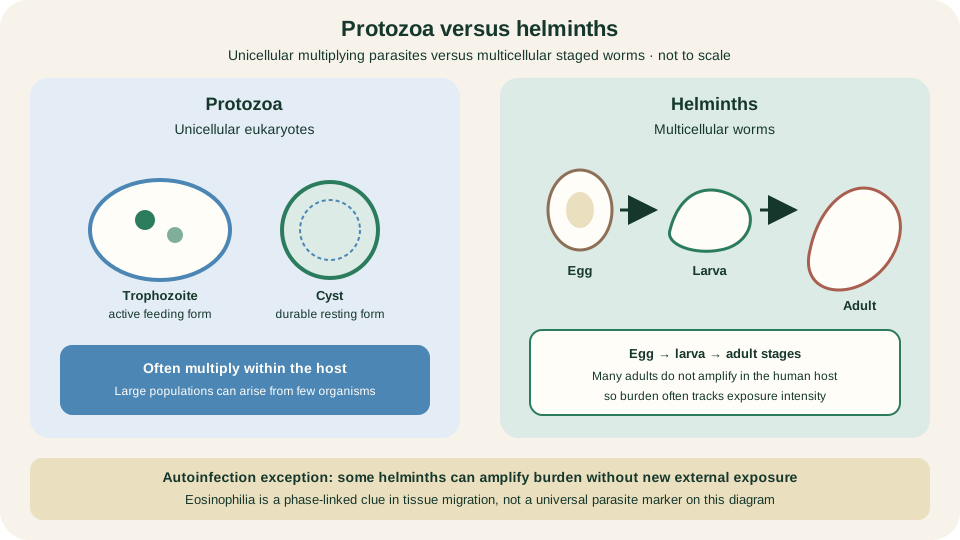
Protozoa: unicellular, often multiplying in-host. Helminths: multicellular staged worms; burden often tracks exposure, with autoinfection exceptions.
SimpleMed original educational diagram
Lifecycle Grammar
Host terms describe reproductive roles, not clinical severity. The definitive host is the host in which sexual reproduction occurs, or in which the adult reproductive stage of a helminth resides. The intermediate host supports larval development or asexual amplification. A patient can be severely ill in an intermediate-host role; "definitive" never means "the sickest host".
A biological vector transmits the parasite and may itself be a host in the lifecycle sense. In malaria, the mosquito both transmits and houses the sexual cycle, so it is vector and definitive host at once. Keeping these definitions strict prevents the common reversal of mosquito and human roles and prepares the malaria and Schistosoma maps that follow. Travel context and prevention belong in Travel-related Infections; this lesson keeps geography subordinate to lifecycle grammar.
Malaria as a Lifecycle Map
Malaria is the clearest two-host map for pre-clinical students. Number the sequence rather than listing species.
- A female Anopheles mosquito injects sporozoites with a blood meal.
- Sporozoites reach the liver and undergo asexual development, releasing merozoites.
- Merozoites invade red cells; repeated blood-stage asexual cycles generate the forms that drive clinical symptoms and that blood films can detect.
- Some parasites differentiate into gametocytes, which do not themselves complete the sexual cycle in the human.
- A mosquito ingesting gametocytes allows fertilisation and further development, including the oocyst stage, producing new sporozoites that migrate to salivary glands and restart the cycle.
Because sexual reproduction occurs in the mosquito, the mosquito is the definitive host and the human is the intermediate host. Blood stages matter twice: they explain fever and systemic illness, and they are the stage set that microscopy interrogates. This map deliberately omits prophylaxis, drug regimens, geography lists and species morphology atlases; those belong elsewhere. The diagnostic implication (thick versus thin films) returns in the final section.
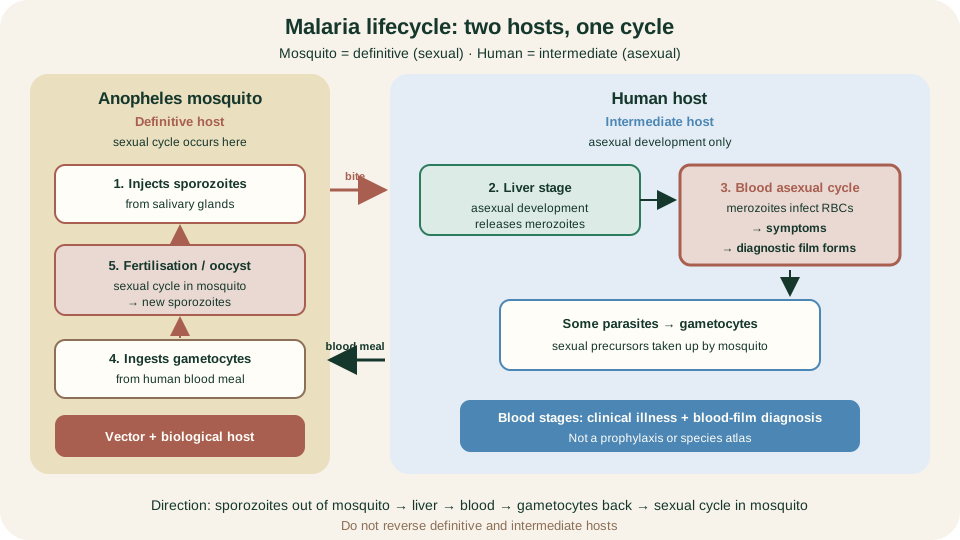
Mosquito definitive (sexual); human intermediate (liver then blood asexual stages); blood forms drive symptoms and film diagnosis.
SimpleMed original educational diagram
Tissue Migration, Eosinophilia and Schistosoma
Eosinophilia can be a useful clue when helminths migrate through tissues and contact the immune system. It is not a universal marker of "any parasite", and a normal eosinophil count does not reliably exclude parasitic infection. Wholly intraluminal adults or intact cystic stages may provoke little blood eosinophilia even when infection is present. Treat the finding as phase-linked supporting evidence, not as a rule-in or rule-out test.
Schistosoma is the single helminth worked example. Humans are the definitive hosts: adult worms live in venous plexuses and reproduce sexually. Freshwater snails are intermediate hosts that release cercariae. Cercariae penetrate intact skin, become schistosomula, and migrate before adults establish in veins. Eggs must leave the host to continue the cycle, but many lodge in tissues. Much of the pathology is driven by granulomatous host responses to those eggs rather than by the adult worms alone. Intensity of infection often tracks exposure because adult flukes do not multiply as adults in humans. Do not expand into species geography, drug choice or travel-clinic algorithms; the lesson is skin entry, dual-host grammar and egg-driven immunopathology. Innate and adaptive injury mechanisms sit in Innate Immunity and Adaptive Immunity.
Diagnosis Follows Form, Site and Stage
Choose tests by asking what form the organism takes, where it lives anatomically, and which stage is present now. Fungal microscopy and histopathology can show morphology and tissue invasion, linking structure to disease rather than mere presence. Culture can recover viable fungi and support speciation, but growth may be slow, and culture of a colonising or contaminating organism needs clinical context. Beta-D-glucan is a broad fungal-wall marker: it is neither organism-specific nor universal (some fungi are poor producers), and false positives occur. Galactomannan supports Aspergillus infection only in the right host and specimen context. Nucleic acid amplification detects target sequences with high analytical sensitivity but does not by itself prove viable invasion. Serology may reflect prior exposure rather than current active disease.
For malaria, thick blood films concentrate parasites and prioritise sensitivity; thin films preserve red-cell morphology for species features and parasitaemia estimates. For intestinal helminths, egg shedding can be intermittent, so single negative stools do not always exclude infection and timing or repetition can matter. There is no single universal "parasite blood test" that replaces this form-site-stage logic.
Return to the spine in one map: shared eukaryotic biology narrows unique targets; fungal wall and ergosterol differences create incomplete selectivity; morphological form and host niche shape fungal disease; protozoa and helminths differ in structure and amplification; definitive and intermediate host roles organise lifecycles; malaria and Schistosoma make those roles concrete; diagnosis succeeds when method matches form, site and stage.
Reviewed by: Dr. Marcus Judge
- 128