
Next Lesson - Anaemia
Core
Cells Carry Antigens, Plasma Carries Antibodies
A blood group is defined by inherited molecules on the red-cell surface. These antigens can be recognised by antibodies in another person's plasma. The central safety rule is therefore directional: ask which antigens are on the donor red cells, then ask whether the recipient has antibodies able to bind them. Binding can coat cells for removal or, in some systems, activate complement and destroy cells within the circulation.
The ABO system provides the clearest model. Group A red cells carry A antigen and group A plasma contains anti-B. Group B reverses that pattern. Group AB red cells carry both antigens and the plasma normally contains neither anti-A nor anti-B. Group O red cells carry neither A nor B antigen, while the plasma contains both antibodies. ABO antibodies develop after early infancy through environmental cross-reactivity and are predominantly IgM. They are not usefully described as antibodies present at birth.
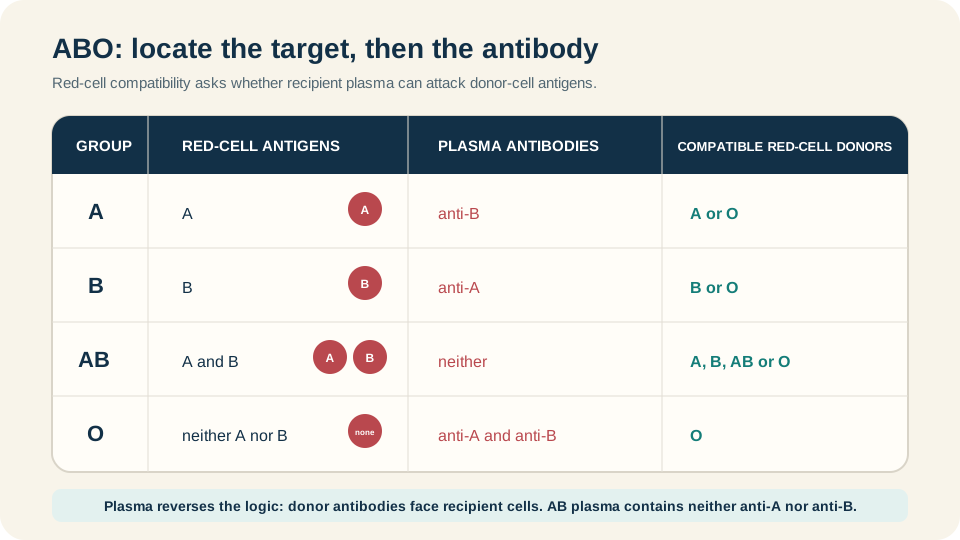
Compatibility depends on keeping a recipient antibody away from its matching donor red-cell antigen.
SimpleMed original educational diagram
ABO Compatibility
For red-cell transfusion, donor antigens face recipient plasma. Group O red cells lack A and B targets, so they can bridge an emergency when the recipient group is unknown. This does not erase RhD or other antigen systems, and it does not make every group O component universally safe. Group AB recipients lack ABO antibodies and can receive ABO-compatible red cells from all four groups.
Plasma compatibility runs in the opposite direction because donor plasma antibodies face recipient red cells. AB plasma has neither anti-A nor anti-B and is therefore ABO-compatible in principle across groups. Group O plasma contains both antibodies and is not the universal plasma choice. Always locate the clinically important antibody and its target before applying a compatibility label.
The word universal is therefore a shorthand with strict limits. It describes one compatibility dimension of one component, not a person whose blood is safe in every form. A group O donor may be an excellent source of emergency red cells while their plasma contains antibodies unsuitable for an A, B or AB recipient. Residual plasma, product processing, RhD and other blood-group systems add further constraints. In practice, the safest product is the correctly identified, appropriately tested component selected for that recipient.
Grouping and Agglutination
A forward group tests the patient's red cells against known anti-A and anti-B reagents. Agglutination with anti-A means A antigen is present; agglutination with anti-B means B antigen is present. A reverse group tests the patient's plasma against known A1 and B reagent cells. Agglutination now reveals the plasma antibody. A typical group A sample therefore reacts with anti-A in the forward test and with B cells in the reverse test.
Agglutination occurs when antibodies cross-link multiple antigen-bearing cells into a visible lattice. The laboratory pattern is useful because cells and plasma interrogate the same identity from opposite directions. If forward and reverse groups disagree, the discrepancy must be investigated rather than averaged into a result. Recent transfusion, weak antigen expression, missing antibodies, rouleaux or a sample error can disrupt the expected pattern. Correct patient and sample identity remains the most important safety layer: elegant serology cannot rescue blood drawn from the wrong person.
This two-sided design is a form of biological redundancy. The forward test asks, "What is on the cells?" while the reverse test asks, "What should be in the plasma?" Concordance makes a familiar ABO pattern more credible; discordance exposes an assumption that needs testing. Agglutination itself does not identify the reason for an unexpected pattern, so the reaction strength, control results, patient age, transfusion history and clinical context must be considered before a group is authorised.
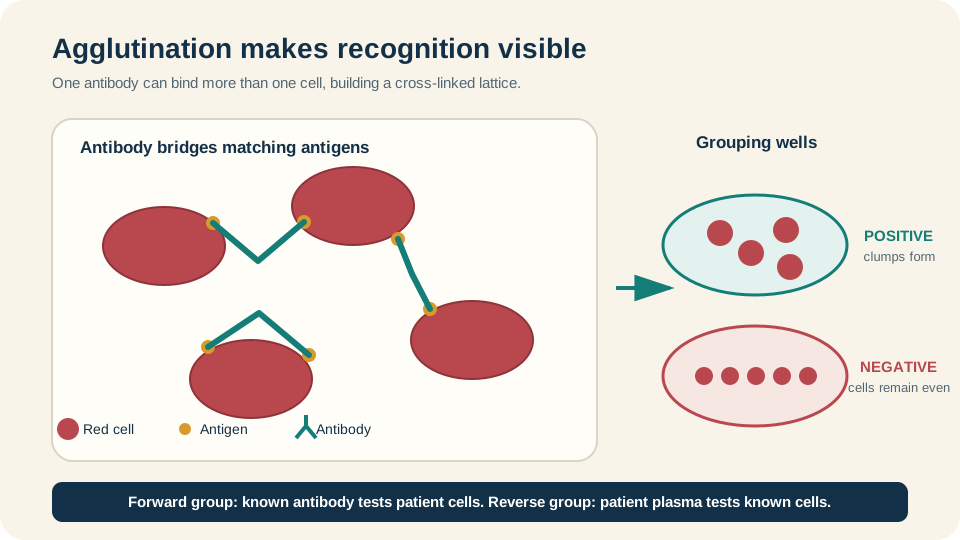
A positive well means the reagent antibody found its antigen and cross-linked cells into a visible lattice.
SimpleMed original educational diagram
RhD Sensitisation and HDFN
The RhD system differs from ABO because anti-D is not naturally occurring. A D-negative person can become sensitised when D-positive red cells enter the circulation through pregnancy or transfusion. An adaptive immune response then produces anti-D, predominantly IgG. Re-exposure can provoke faster antibody production and removal of D-positive cells.
In pregnancy, maternal IgG anti-D can cross the placenta, bind D-positive fetal red cells and cause haemolytic disease of the fetus and newborn. Consequences range from neonatal jaundice to fetal anaemia, hydrops and death. Later D-positive pregnancies are classically at greater risk after sensitisation, but a first pregnancy is not guaranteed to be safe because exposure can occur before or during it. Anti-D immunoglobulin prophylaxis reduces maternal sensitisation. RhD is the teaching model, not the whole disease: antibodies to antigens such as Kell or Duffy can also harm fetal cells.
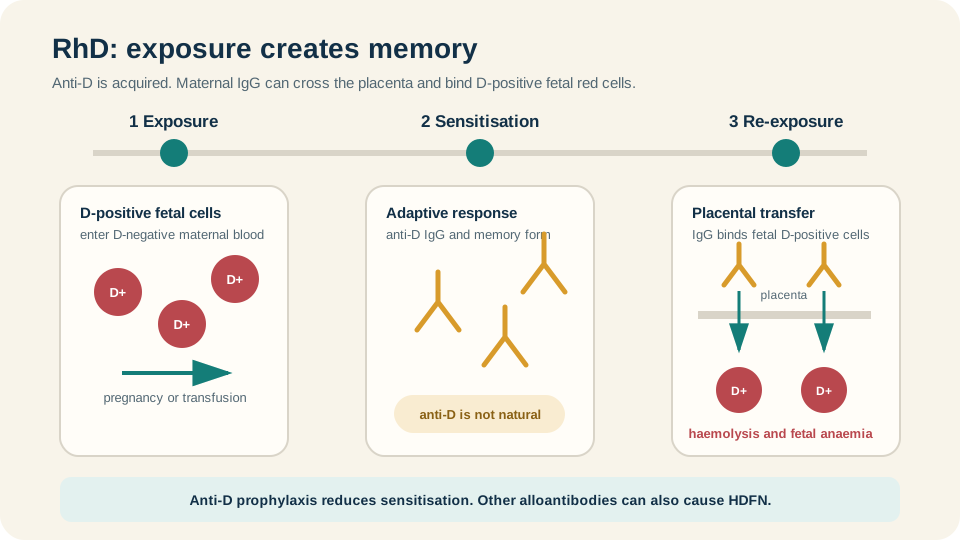
Exposure creates immune memory; maternal IgG can later cross the placenta and target antigen-positive fetal cells.
SimpleMed original educational diagram
Pre-transfusion Testing
Pre-transfusion testing is a chain. First, identify the patient and label the sample correctly. The laboratory establishes ABO and RhD group, then performs an antibody screen using selected reagent cells. This searches for clinically significant non-ABO alloantibodies, such as antibodies formed after pregnancy or a previous transfusion. A positive screen prompts antibody identification and selection of donor cells lacking the relevant antigen.
A group and save comprises grouping, antibody screening and retention of a valid sample. It does not necessarily reserve units. A crossmatch checks compatibility between recipient plasma and selected donor red cells, either serologically or electronically under validated conditions. It is the final compatibility layer, not a substitute for patient identity, a reliable ABO group or an antibody screen. A unit can be ABO matched yet unsuitable because a non-ABO antigen meets a recipient alloantibody.
The chain also explains why transfusion history matters. An alloantibody may fall below current detection yet remain recorded from a previous immune response. Re-exposure to its antigen can trigger rapid memory-cell expansion. Laboratories therefore combine the current sample with relevant historical results and choose antigen-negative cells when a clinically significant antibody is known. A negative screen means no antibody was detected by that method at that time; it is not proof that immune risk is impossible.
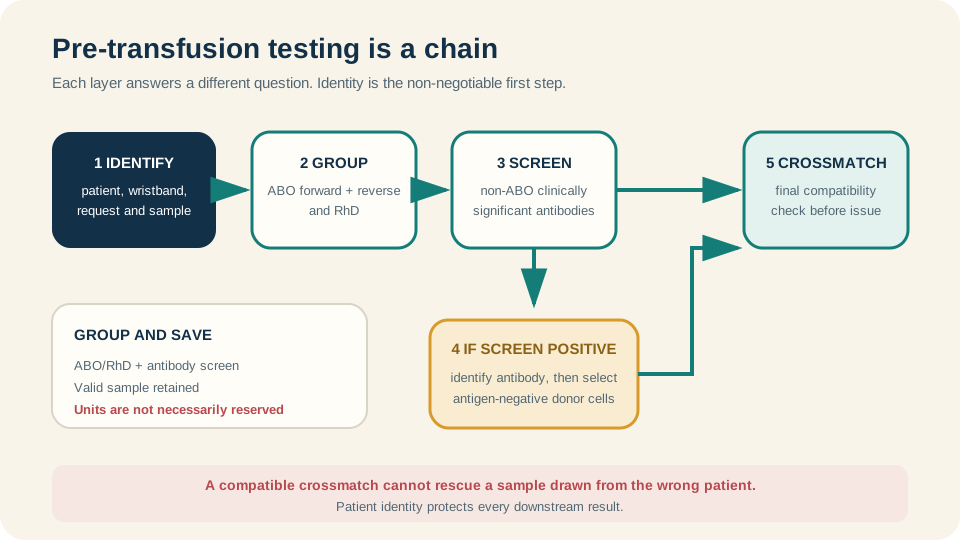
Each testing layer answers a different question; none compensates for a wrong patient or wrong sample.
SimpleMed original educational diagram
Components Replace Functions
Modern transfusion usually replaces the missing function rather than giving whole blood. Red cells restore oxygen-carrying capacity. Platelets support primary haemostasis. Fresh frozen plasma supplies multiple coagulation factors, while cryoprecipitate is fibrinogen-rich. These roles explain product choice, but they do not define a threshold or dose. Coagulation-product prescribing and massive-transfusion protocols belong to dedicated clinical guidance.
Component separation reduces unnecessary exposure but does not make products immunologically empty. Red-cell units retain donor antigens, plasma carries donor proteins and antibodies, and platelet products contain cells plus variable plasma. The question "Which function is missing?" chooses the component family; the questions "Which antigens and antibodies can meet?" and "How much volume can this recipient tolerate?" still shape compatibility and reaction risk.
Reaction Patterns
An acute haemolytic transfusion reaction often reflects ABO-incompatible red cells. Recipient antibody binds donor cells, complement can drive intravascular haemolysis, and the patient may develop fever, rigors, pain, hypotension, haemoglobinuria, acute kidney injury or disseminated intravascular coagulation. Bacterial contamination can also produce fever, rigors and shock, so a febrile collapse is never assumed to be a simple fever reaction.
A febrile non-haemolytic reaction produces fever or rigors through recipient anti-leukocyte responses or inflammatory cytokines without red-cell haemolysis. It is a diagnosis of exclusion when haemolysis or sepsis remains possible. A mild allergic reaction commonly causes urticaria and pruritus in response to plasma proteins. Anaphylaxis adds dangerous airway, breathing or circulatory compromise and requires immediate emergency treatment.
Both TRALI and TACO can present with acute dyspnoea and hypoxaemia. In transfusion-related acute lung injury, donor antibodies or other biological mediators activate recipient neutrophils in the pulmonary circulation, causing inflammatory, non-cardiogenic pulmonary oedema. In transfusion-associated circulatory overload, volume and rate exceed cardiovascular or renal reserve, producing hydrostatic pulmonary oedema. Hypertension, raised venous pressure and positive fluid balance favour TACO; shock or fever and no overload favour TRALI, although bedside distinction can be difficult.
A delayed haemolytic reaction may appear days or weeks later when an old alloantibody response rebounds after exposure. Falling haemoglobin, jaundice or a new positive antibody test can reveal it. Timing narrows a differential, but mechanism and investigation establish the diagnosis.
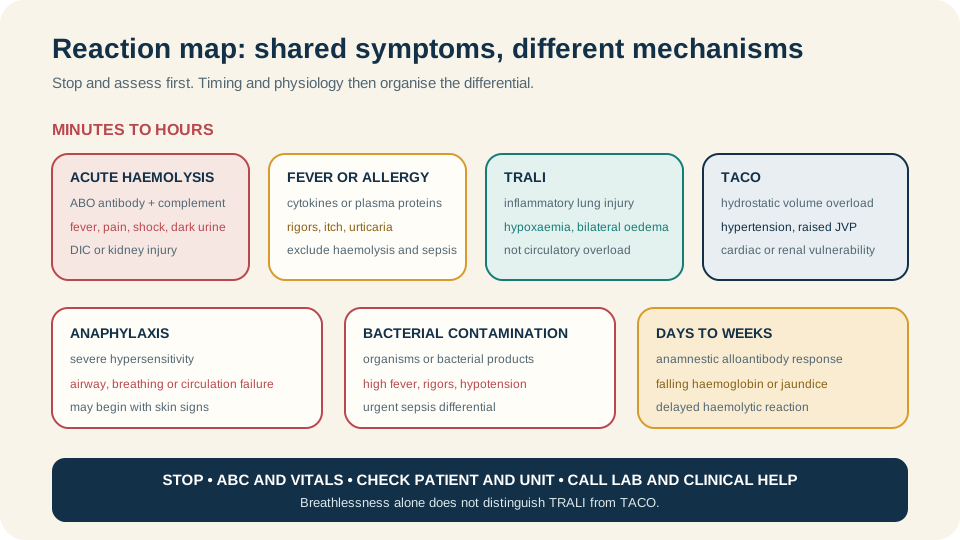
Shared symptoms demand a stop-and-assess response; mechanism separates immune injury, infection and overload.
SimpleMed original educational diagram
First Response and Emergency Compatibility
For a suspected significant reaction, stop the transfusion and assess airway, breathing, circulation and vital signs. Call for clinical help. Maintain intravenous access using a compatible fluid and new administration set according to local policy. Recheck the patient's identity against the unit and compatibility label, inspect the component, notify the transfusion laboratory, and send the unit, tubing and requested blood or urine samples for investigation. Treat the evolving syndrome while serious haemolysis, sepsis, anaphylaxis, TRALI and TACO are considered. Do not discard the evidence or restart a unit without protocol-led senior review.
In life-threatening bleeding, emergency components bridge the interval until group-specific compatible products are ready. Group O red cells avoid A and B antigens, but RhD still matters. O D negative stock is scarce and is prioritised for people in whom anti-D would be especially consequential, including D-negative females with childbearing potential and children; local policy may use O D positive cells for selected adults. Move to group-specific compatible red cells as soon as safely possible. AB plasma lacks anti-A and anti-B, so its ABO compatibility logic is the reverse of the group O red-cell rule.
The reusable method is simple: locate antigen, locate antibody, predict whether they can meet, then add identity and timing. That chain connects grouping, crossmatching and reactions, and prepares the red-cell framework for Anaemia.
Reviewed by: Dr. Marcus Judge
- 137