
During any examination in an OSCE it is important to understand the pathology and reasoning behind each of the signs and symptoms elicited, even if the patient being examined is ‘normal’. This article explains how to perform a Cushing’s syndrome examination and the key findings you should look for, showing you what each sign means and what conditions it may indicate.
Cushing’s syndrome is the clinical state that results from prolonged exposure to excess glucocorticoid (cortisol). The commonest cause overall is exogenous – long-term treatment with corticosteroid medication. Endogenous causes are divided into ACTH-dependent disease (most often a pituitary adenoma secreting ACTH, termed Cushing’s disease, or ectopic ACTH from a tumour such as a small-cell lung cancer) and ACTH-independent disease (a cortisol-secreting adrenal adenoma or carcinoma). Because cortisol acts on almost every tissue, the signs are widespread, which is why a structured head-to-toe approach is so useful.
General Inspection
A great deal can be gathered from the end of the bed before you lay a hand on the patient. Look for the characteristic body habitus of cortisol excess: central (truncal) obesity with relatively thin limbs. This pattern occurs because glucocorticoids redistribute fat centrally while promoting proximal muscle breakdown (a catabolic effect), giving the classic ‘lemon on matchsticks’ appearance.
Note any obvious moon face (rounded, plethoric facial appearance) and a buffalo hump (a fat pad over the upper back and lower neck). Look around the bedside for clues to the underlying cause, particularly corticosteroid medication (for example inhalers, eye drops or tablets such as prednisolone), as iatrogenic steroid use is the single most common cause of the syndrome.
Glance for objects that point to the metabolic complications of cortisol excess, such as a capillary blood glucose monitor, insulin pen or sugary drinks, since glucocorticoids drive insulin resistance and frequently unmask diabetes mellitus. A walking stick or frame at the bedside is also worth noting, as it may reflect the proximal myopathy or a fragility fracture from steroid-induced osteoporosis.
Assess whether the patient appears comfortable and well, or is in distress. Also take a moment to note mobility aids or signs of difficulty moving, which may hint at the proximal myopathy assessed later. Patients with chronic cortisol excess may also appear low in mood or anxious, as psychiatric features such as depression, emotional lability and even psychosis are well recognised; a flat affect at the bedside is a genuine clue rather than incidental.
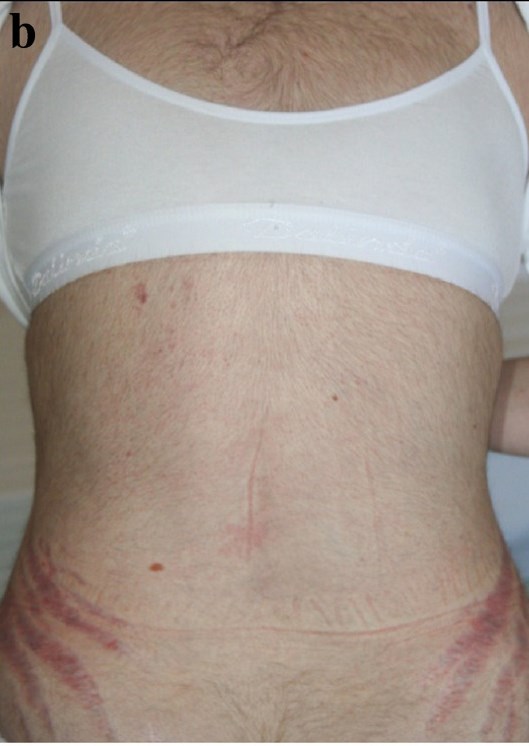
Image - Truncal changes in a patient with iatrogenic Cushing’s syndrome, demonstrating hirsutism and purplish abdominal striae caused by glucocorticoid excess
Creative commons source by Celik O, Niyazoglu M, Soylu H, Kadioglu P [CC BY 2.5 (https://creativecommons.org/licenses/by/2.5)]
Legs and Oedema
Examine the lower legs, which is why exposure of the legs was arranged at the start. As in the arms, look for thin skin, bruising and striae, and assess the bulk and power of the proximal leg muscles at the hips, where wasting is often most pronounced.
Press firmly over the shins or ankles for a few seconds to check for pitting oedema. Cortisol has weak mineralocorticoid activity, and when present in large amounts it overwhelms the enzyme that normally protects the mineralocorticoid receptor, acting on the kidney to promote sodium and water retention. This contributes both to oedema and to the hypertension seen in this syndrome. In severe or ectopic ACTH-driven disease, the same mineralocorticoid effect drives potassium loss and can cause a hypokalaemic metabolic alkalosis.
Finally, look at the lower legs and feet for evidence of poor healing, such as chronic ulcers or longstanding bruises, and for skin that is so thin it has torn over the shin. These findings reinforce the impression of glucocorticoid excess and are a reminder that these patients heal slowly and are prone to infection.
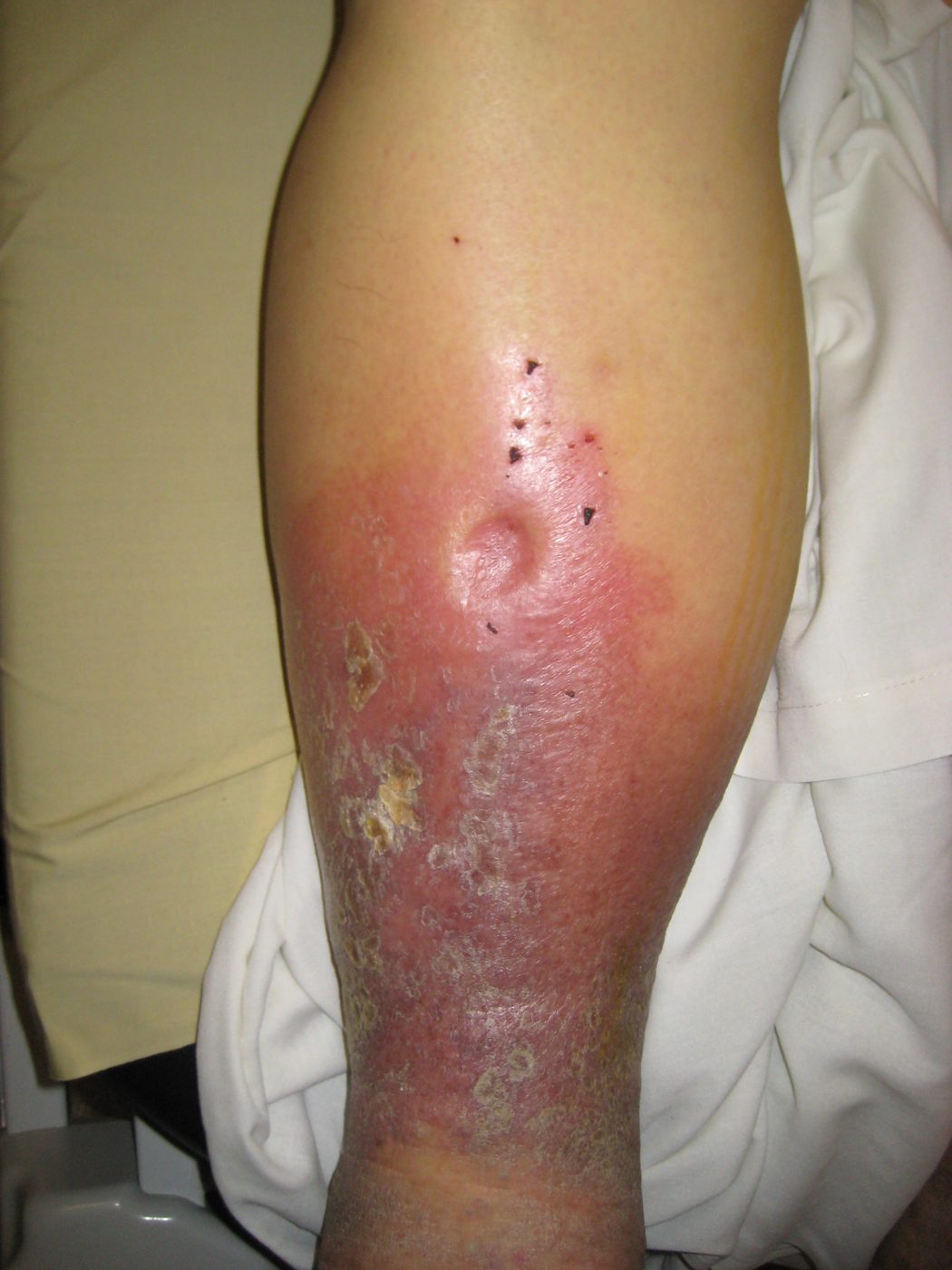
Image - Pitting oedema, demonstrated by an indentation that remains after firm pressure. The mineralocorticoid action of excess cortisol promotes sodium and water retention, contributing to oedema in Cushing’s syndrome
SimpleMed original image, credit 'SimpleMed original'
- 215