
Cranial Nerve OSCE Examination
During any examination in an OSCE it is important to understand the pathology and reasoning behind each of the signs and symptoms elicited, even if the patient being examined is ‘normal’. This article explains how to perform a cranial nerve examination and the key findings you should look for, showing you what each sign means and what conditions it may indicate.
The cranial nerve examination assesses the twelve pairs of cranial nerves, which arise directly from the brain and brainstem rather than the spinal cord. A logical approach is to work through the nerves in numerical order (CN I to CN XII), as this ensures nothing is missed and mirrors the order in which they emerge. Throughout, you are trying to localise a lesion – deciding whether a problem lies in the nerve itself, the brainstem nucleus, or the higher pathways – so understanding the underlying anatomy is essential.
Contents
- Introduction
- General Inspection
- Olfactory Nerve (CN I)
- Optic Nerve (CN II)
- Oculomotor, Trochlear and Abducens Nerves (CN III, IV, VI)
- Trigeminal Nerve (CN V)
- Facial Nerve (CN VII)
- Vestibulocochlear Nerve (CN VIII)
- Glossopharyngeal and Vagus Nerves (CN IX, X)
- Accessory Nerve (CN XI)
- Hypoglossal Nerve (CN XII)
- Completing the Examination
- Quiz
Introduction
Wash your hands and don personal protective equipment if appropriate.
Introduce yourself to the patient and ensure to mention your grade e.g. 3rd year medical student/junior doctor/consultant.
Confirm the patient’s details taking 3 points of identification usually; full name, date of birth and NHS/hospital number.
Obtain consent for the examination, ensuring to explain what the examination will entail. A useful explanation is that you would like to test the nerves that control the senses and movements of the head and face, and that it will involve looking into the eyes, testing sensation and asking the patient to perform some movements.
Position the patient seated, ideally on a chair with you sitting directly opposite at roughly the same eye level so that you can compare both sides of the face symmetrically.
Ask the patient if they have any pain anywhere before you begin, and gather the equipment you may need: a pen torch, Snellen chart, Ishihara plates, an ophthalmoscope, a cotton wisp, a neuro-tip, a 512 Hz tuning fork, a tongue depressor and a small item with a smell for olfaction.
General Inspection
Begin by inspecting the patient and their surroundings from the end of the bed or across the room. Look at the face at rest for any obvious asymmetry, facial droop, ptosis (drooping of the upper eyelid) or strabismus (a squint), as these can point to a cranial nerve lesion before any formal testing is performed.
Note any abnormal movements such as facial twitching, and listen to the patient’s speech – dysarthria (slurred speech) can result from weakness of the muscles supplied by several cranial nerves, while a hoarse or ‘bovine’ cough may suggest a vagus nerve problem.
Also look for any scars on the scalp or behind the ear, which may indicate previous neurosurgery, and glance at the limbs as the patient settles, since wasting, tremor or abnormal posturing can hint at a wider neurological process.
Look around the bedside for clues such as hearing aids, glasses, a white cane or other walking aids, a feeding tube (which may indicate swallowing difficulties), or prisms on spectacles used to correct double vision. These objects can give early clues to the underlying diagnosis.
Olfactory Nerve (CN I)
The olfactory nerve is the first cranial nerve and is responsible for the sense of smell. In an OSCE it is rarely formally tested, but you should always screen for it by asking the patient whether they have noticed any recent change in their sense of smell or taste (the two are closely linked, as much of what we perceive as taste is actually smell).
If formal testing is required, occlude one nostril at a time and ask the patient to identify a familiar smell, such as coffee or peppermint, with their eyes closed.
Reduced or absent sense of smell is called anosmia. The commonest causes are benign, such as nasal congestion from a cold. More important neurological causes include head trauma (which can shear the delicate olfactory nerve fibres as they pass through the cribriform plate), a frontal lobe tumour, or early Parkinson’s disease, in which anosmia can precede the motor features by years.
Optic Nerve (CN II)
The optic nerve carries visual information from the retina to the brain. It is tested thoroughly because so many neurological conditions affect vision. Assessment is conventionally broken down into acuity, fields, pupillary responses, colour vision and fundoscopy.
Visual acuity is assessed using a Snellen chart at 6 metres, testing each eye individually with the patient wearing their usual glasses (to correct refractive error, which is not a neurological problem). Acuity is recorded as a fraction such as 6/6, where the top number is the testing distance and the bottom number is the distance at which a person with normal sight could read that line. Reduced acuity that does not correct with a pinhole suggests pathology of the eye or optic nerve.
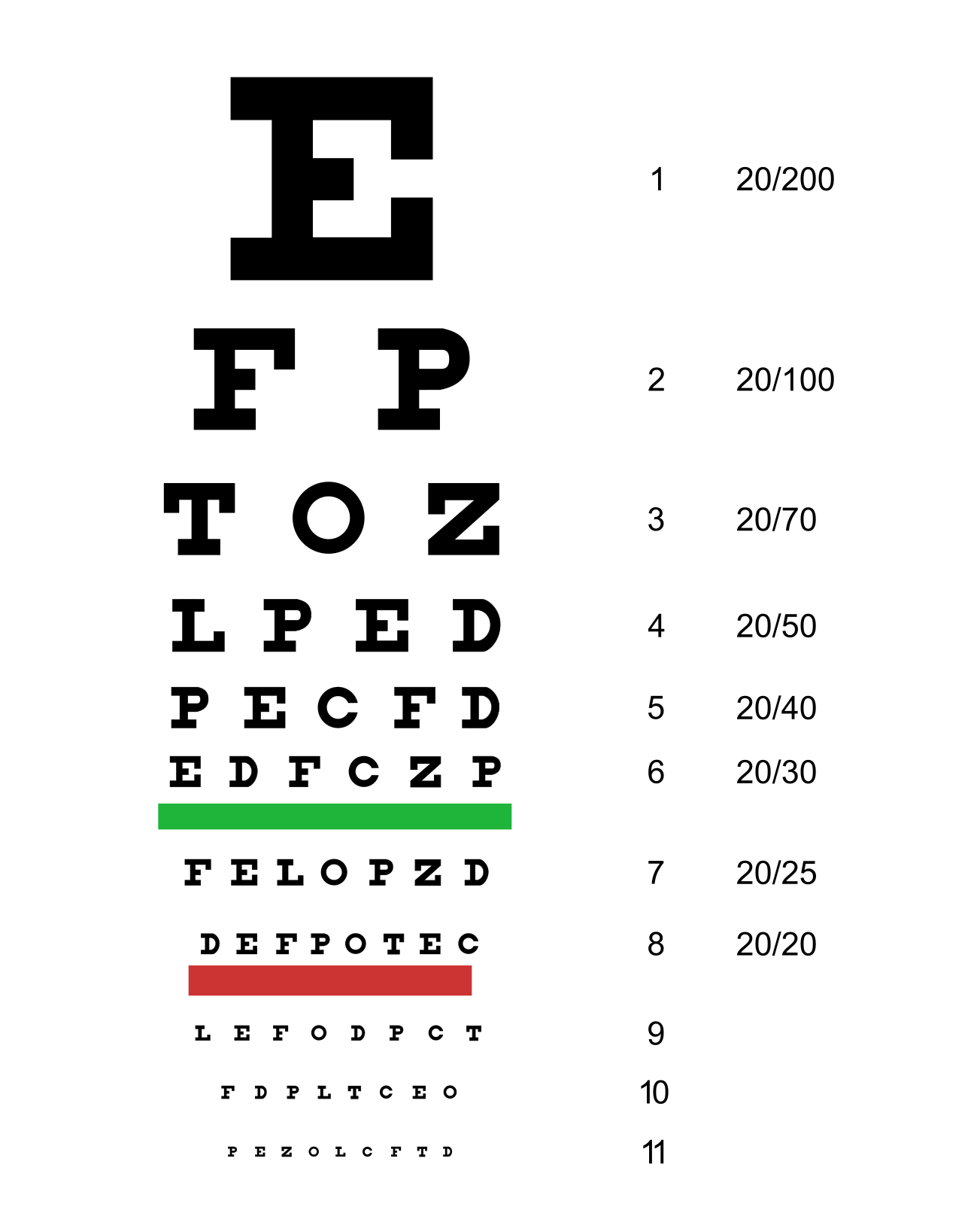
Image - A Snellen chart, read at 6 metres to assess visual acuity. The smallest line the patient can read gives the bottom number of the recorded fraction
SimpleMed original image, credit ‘SimpleMed original’
Colour vision is tested using Ishihara plates. Loss of colour vision, particularly red desaturation (where red appears washed out), is an early and sensitive sign of optic nerve disease such as optic neuritis, which is strongly associated with multiple sclerosis.
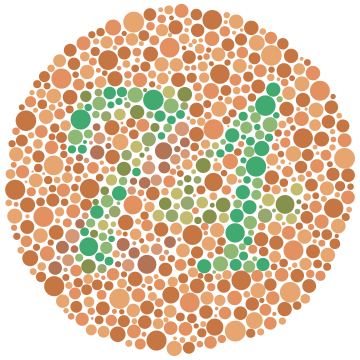
Image - An Ishihara plate used to test colour vision. A person with normal colour vision reads the number, whereas it may be invisible to someone with a colour vision deficit or early optic nerve disease
Creative commons source by Shinobu Ishihara [Public domain]
Visual fields are tested by confrontation, comparing the patient’s field to your own. Sit opposite the patient, ask them to cover one eye and look at your nose, then bring a moving finger or red hatpin in from the periphery in each quadrant.
Mapping out a field defect is one of the most useful localising tests in neurology, because the pattern of loss tells you where along the visual pathway the lesion lies. A monocular field loss localises to the eye or optic nerve in front of the chiasm; a bitemporal hemianopia (loss of both outer halves) localises to the optic chiasm and is classically caused by a pituitary tumour compressing the crossing nasal fibres; and a homonymous hemianopia (loss of the same side in both eyes) localises behind the chiasm, often due to a stroke affecting the optic tract or radiation.
Before mapping the fields formally, screen for visual inattention (also called visual neglect). With both of the patient’s eyes open, hold your hands out to either side and wiggle a finger on one hand, then the other, then both at the same time. A patient who sees each side individually but consistently misses the finger on one side when both move together has visual extinction. This is not a field defect at all but a problem of attention, typically from a parietal lobe lesion (usually after a right-sided stroke causing left-sided neglect), so it helps you separate true visual loss from cortical inattention.
You can also map the blind spot, the small physiological gap in each field where the optic disc meets the retina and there are no photoreceptors. Comparing your blind spot with the patient’s using a red pin shows whether theirs is enlarged; an enlarged blind spot points to a swollen optic disc (papilloedema) and therefore raised intracranial pressure.
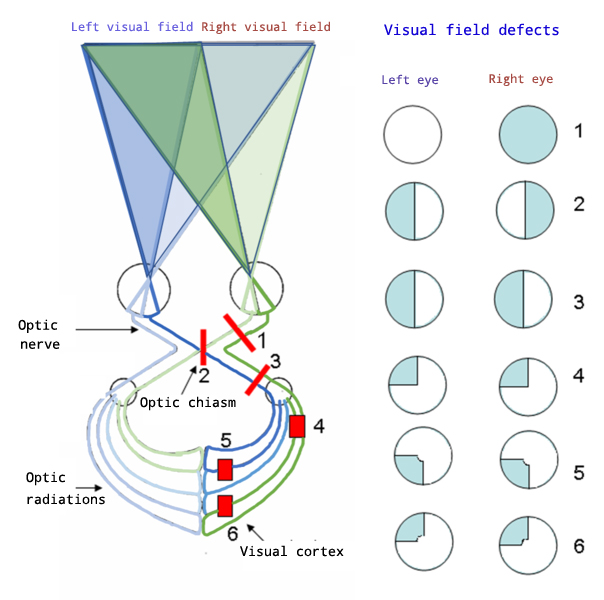
Image - How lesions at different points along the visual pathway produce characteristic field defects. A chiasmal lesion causes a bitemporal hemianopia, while a lesion behind the chiasm causes a homonymous hemianopia
Creative commons source by As eo [CC BY-SA 4.0 (https://creativecommons.org/licenses/by-sa/4.0)]
Before testing the reflexes, inspect the pupils themselves, comparing their size, shape and symmetry. A small difference in size (anisocoria) can be physiological, but a markedly dilated pupil suggests a third nerve palsy, while a small, irregular pupil may point to a Horner’s syndrome or an Argyll Robertson pupil.
The pupillary light reflex tests the integrity of the optic nerve (the afferent, ‘sensing’ limb) and the oculomotor nerve (the efferent, ‘responding’ limb). Shine a torch into one eye and observe both the direct response (constriction of that pupil) and the consensual response (constriction of the other pupil), which occurs because the signal is shared between both sides of the midbrain.
The swinging light test detects a relative afferent pupillary defect (RAPD, or Marcus Gunn pupil). Move the torch quickly from one eye to the other. Normally both pupils stay constricted. If one optic nerve is damaged, the affected pupil paradoxically dilates when the light swings onto it, because the weaker afferent signal from that eye produces less constriction than the consensual drive it had been receiving. A RAPD is a sign of significant optic nerve disease such as optic neuritis, or extensive retinal damage.
The accommodation reflex is tested by asking the patient to focus on a distant object and then on your finger held roughly 30 cm in front of their nose; as they switch focus to the near target the eyes should converge and the pupils constrict.
Fundoscopy using an ophthalmoscope allows direct inspection of the optic disc and retina. Look for a swollen disc (papilloedema), which suggests raised intracranial pressure, or a pale disc (optic atrophy), which suggests chronic optic nerve damage.
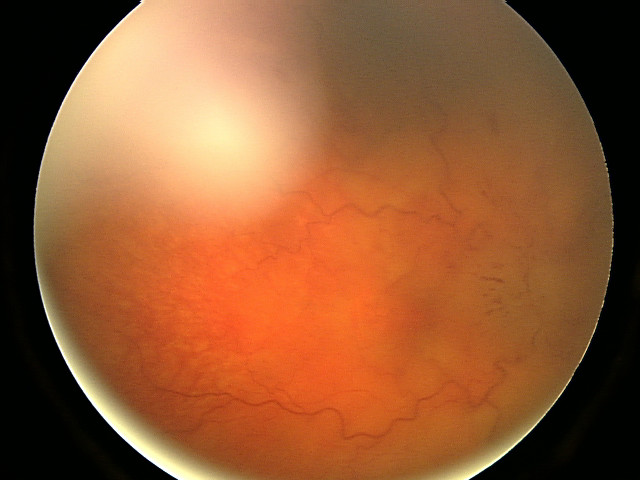
Image - Papilloedema seen on fundoscopy: the optic disc is swollen with blurred margins, indicating raised intracranial pressure
SimpleMed original image, credit ‘SimpleMed original’
Oculomotor, Trochlear and Abducens Nerves (CN III, IV, VI)
These three nerves are tested together because they all control eye movements. The oculomotor nerve (CN III) supplies most of the extraocular muscles, raises the eyelid, and carries the parasympathetic fibres that constrict the pupil. The trochlear nerve (CN IV) supplies only the superior oblique muscle (which moves the eye down and in), and the abducens nerve (CN VI) supplies only the lateral rectus (which moves the eye outwards).
First inspect for ptosis and the resting position of the eyes. Then hold your finger about 30 cm in front of the patient and ask them to follow it with their eyes (keeping their head still) through an ‘H’ pattern that takes each eye through its full range of movement. Ask the patient to report any double vision (diplopia) and watch for nystagmus (involuntary rhythmic eye movements).
A complete third nerve palsy produces a characteristic picture: the eye is held ‘down and out’, there is complete ptosis, and the pupil may be fixed and dilated. A painful third nerve palsy with a blown pupil is a red flag, as it can be caused by a compressive lesion such as a posterior communicating artery aneurysm – the surface parasympathetic fibres are compressed first, hence the early pupil involvement. A medical (microvascular) cause such as diabetes tends to spare the pupil.
A fourth nerve palsy causes vertical diplopia that is worst on looking down (for example reading or descending stairs); patients often tilt their head away from the affected side to compensate. A sixth nerve palsy causes a convergent squint with the affected eye unable to abduct, producing horizontal diplopia. Because of its long intracranial course, the sixth nerve is vulnerable to raised intracranial pressure and is therefore a poor localising sign.
Trigeminal Nerve (CN V)
The trigeminal nerve is the great sensory nerve of the face and also supplies the muscles of mastication. It has three divisions: ophthalmic (V1), maxillary (V2) and mandibular (V3), which supply sensation to the forehead, cheek and jaw respectively.
Test light touch sensation with a cotton wisp (and, if indicated, pinprick with a neuro-tip) over each of the three divisions on both sides, asking the patient to compare left with right. A sensory deficit in a trigeminal distribution can be caused by a brainstem lesion, a tumour at the cerebellopontine angle, or herpes zoster (shingles) affecting a division.
Test the muscles of mastication by asking the patient to clench their teeth while you palpate the masseter and temporalis muscles, then to open the jaw against resistance. A lower motor neurone lesion causes the jaw to deviate towards the side of the weakness when opened, because the unopposed pterygoid on the normal side pushes it across.
The corneal reflex tests V1 as the afferent limb and the facial nerve (CN VII) as the efferent limb: lightly touching the cornea with a wisp of cotton wool should cause both eyes to blink. The jaw jerk is usually absent or only slightly present; a brisk jaw jerk suggests an upper motor neurone lesion above the pons.
Facial Nerve (CN VII)
The facial nerve supplies the muscles of facial expression, as well as carrying taste from the anterior two-thirds of the tongue, supplying the lacrimal and salivary glands, and innervating the stapedius muscle in the middle ear. Before testing movement, ask two quick screening questions: whether the patient has noticed any change in their sense of taste (the chorda tympani branch carries taste from the front of the tongue), and whether ordinary sounds seem uncomfortably loud (hyperacusis), which occurs when the stapedius is paralysed and can no longer damp down the movement of the ear ossicles. Then test the motor function by asking the patient to perform a series of movements: raise the eyebrows, screw the eyes tightly shut (and resist you trying to open them), puff out the cheeks, and show the teeth.
The key to interpreting facial weakness is whether the forehead is involved. The upper face receives motor input from both sides of the brain, whereas the lower face is supplied only by the opposite side. This anatomical fact lets you separate two very different diagnoses:
- A lower motor neurone (LMN) lesion, affecting the nerve itself, weakens the whole half of the face including the forehead. The classic cause is Bell’s palsy, an idiopathic facial nerve palsy, but it can also be caused by a parotid tumour, Ramsay Hunt syndrome (herpes zoster) or middle ear disease.
- An upper motor neurone (UMN) lesion, such as a stroke, weakens only the lower half of the face and spares the forehead, because the forehead still receives input from the unaffected hemisphere.
If you find a lower motor neurone pattern of weakness, inspect the external auditory meatus and the pinna for the painful vesicular rash of Ramsay Hunt syndrome (herpes zoster of the geniculate ganglion), and palpate the parotid for a mass, as both are important treatable causes of an LMN facial palsy that are easy to miss.
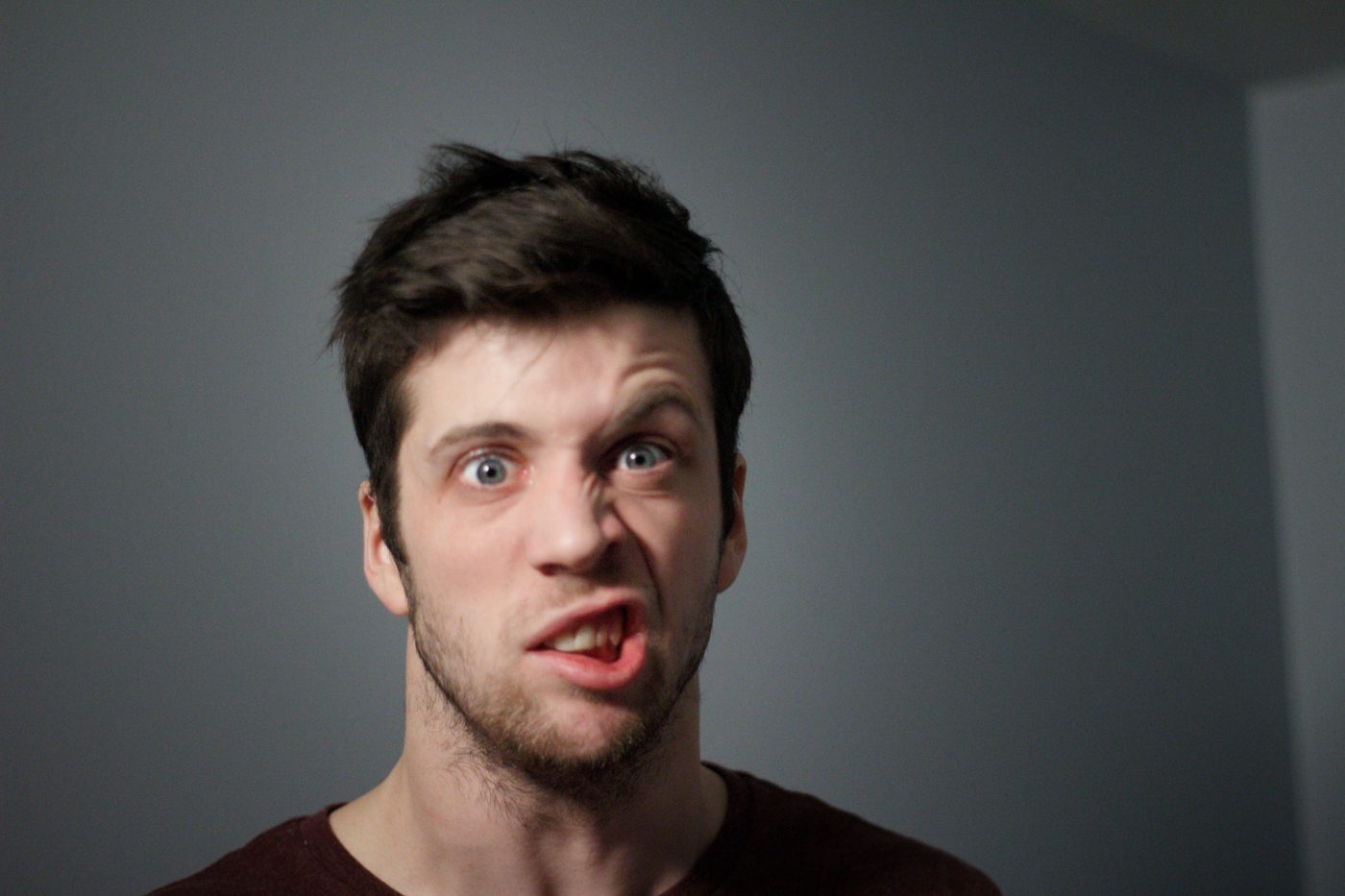
Image - A patient with a left facial nerve palsy attempting to show their teeth. The mouth is drawn to the unaffected side. In a lower motor neurone lesion such as Bell’s palsy the forehead is also weak
Creative commons source by Benjaminginterr [CC BY-SA 4.0 (https://creativecommons.org/licenses/by-sa/4.0)]
Vestibulocochlear Nerve (CN VIII)
The vestibulocochlear nerve has two components: the cochlear part, responsible for hearing, and the vestibular part, responsible for balance. Begin with a gross screen of hearing by whispering a number or word into one ear while masking the other (by rubbing your fingers near it), and ask the patient to repeat it.
If hearing loss is detected, use the Rinne and Weber tests with a 512 Hz tuning fork to distinguish between the two main types of deafness:
- Conductive hearing loss is caused by a problem getting sound to the cochlea, such as ear wax, fluid in the middle ear, or otosclerosis.
- Sensorineural hearing loss is caused by a problem with the cochlea or the nerve itself, such as presbycusis (age-related loss), noise damage, or an acoustic neuroma (vestibular schwannoma).
In Rinne’s test, the vibrating fork is held first on the mastoid process (bone conduction) and then beside the ear (air conduction). Normally air conduction is louder than bone conduction (a ‘positive’ result), because the middle ear amplifies sound. In conductive loss this is reversed, as bone conduction bypasses the faulty conducting apparatus.
In Weber’s test, the fork is placed in the middle of the forehead. Normally the sound is heard equally in both ears. In conductive loss the sound localises to the affected ear (which is shielded from background noise), whereas in sensorineural loss it localises away from the affected ear, towards the better-hearing side.
Glossopharyngeal and Vagus Nerves (CN IX, X)
The glossopharyngeal (CN IX) and vagus (CN X) nerves are tested together because they work closely in the control of swallowing, phonation and the gag reflex. The glossopharyngeal nerve carries sensation from the posterior pharynx and taste from the posterior third of the tongue, while the vagus provides the motor supply to the palate, pharynx and larynx.
Listen to the patient’s voice for hoarseness, which can indicate a recurrent laryngeal (vagus) nerve palsy. Ask the patient to cough; a weak, ‘bovine’ cough that lacks an explosive start also suggests vagal weakness.
Inspect the soft palate and ask the patient to say ‘ahh’. The palate should rise symmetrically. In a unilateral vagus lesion the palate is pulled towards the normal side, so the uvula deviates away from the side of the lesion, because the working muscle on the healthy side is unopposed.
The gag reflex (afferent limb CN IX, efferent limb CN X) can be tested by touching the back of the pharynx with a tongue depressor, but as it is unpleasant it is often simply mentioned rather than performed. Assessing swallowing with a sip of water is a more practical bedside test of these nerves, and is particularly relevant after stroke when an unsafe swallow puts the patient at risk of aspiration.
Accessory Nerve (CN XI)
The accessory nerve provides the motor supply to two muscles: the sternocleidomastoid, which turns the head to the opposite side, and the trapezius, which shrugs the shoulder.
First inspect both muscles for wasting. Test the trapezius by asking the patient to shrug their shoulders against resistance, comparing the strength on each side. Test the sternocleidomastoid by asking the patient to turn their head to each side against the resistance of your hand placed on their cheek; note that turning the head to the right tests the left sternocleidomastoid, and vice versa.
Weakness can result from damage to the nerve in the neck (for example after surgery such as lymph node biopsy), from motor neurone disease, or from a brainstem lesion.
Hypoglossal Nerve (CN XII)
The hypoglossal nerve supplies the muscles of the tongue. Begin by inspecting the tongue at rest, while it lies in the floor of the mouth, looking for wasting and fasciculations (small flickering movements). Fasciculations with wasting are a sign of a lower motor neurone lesion and, if present in the tongue together with limb signs, raise the possibility of motor neurone disease.
Next ask the patient to protrude their tongue. With a unilateral lower motor neurone lesion the tongue deviates towards the side of the lesion, because the genioglossus muscle on the healthy side pushes the tongue across towards the weak side. Finally, assess tongue power by asking the patient to push their tongue into each cheek against the resistance of your finger.
Completing the Examination
Thank the patient and wash your hands.
Summarise your findings, stating which cranial nerves were normal and describing any abnormalities and where in the pathway you think the lesion lies.
To complete the examination, suggest performing a full peripheral neurological examination of the upper and lower limbs and an examination of the cerebellum, as cranial nerve signs rarely occur in isolation. Depending on the findings, you might also suggest formal visual acuity and field testing, audiometry, a swallow assessment by a speech and language therapist, and relevant imaging such as an MRI of the brain to identify a structural cause.
- 4